Showing posts with label Jesus. Show all posts

Thursday, August 25, 2011

John 11:1-46 Resurrection Lesson: BELIEF

v.v. 1-16 Jesus with the Disciples
v.v. 17-29 Jesus with Martha
v.v. 30-37 Jesus with Mary
v.v. 38-44 Jesus with Lazarus
v.v. 45-46 Jesus with the 'many' and the 'some'


vv1-16
Now a certain man was sick, Lazarus of Bethany, the village of Mary and her sister Martha. It was the Mary who anointed the Lord with ointment, and wiped His feet with her hair, whose brother Lazarus was sick. As we set up this event that is dear to all those who follow Jesus, our gospel writer, John, brings us exclusively into the arena where the teaching of Jesus is applicable to all of life and death. According to John, which is not purely chronological, Jesus has been beyond the Jordan (east) after the Feast of Dedication. He is in trans Jordan region. Note the pre-event mention of Mary's act of service and worship. John does not tell us, 21st Century readers, about Mary's act until chapter 12, but for some reason, he desires for us to not be mistaken. This is the same girl and the same family. In the midst of complete turmoil with the sickness and death of a loved one, Jesus speaks and teaches His followers regarding the truths that will never be swayed by life's mourning events. Hence, news from Bethany provides an opportunity for the His disciples to learn a valuable lesson. The sisters sent word to Him, saying, “Lord, behold, he whom You love is sick.” Here is the dreaded news that a loved one is sick. The sisters, deep in their grief sent word to Jesus. In appealing to the deepest part of His being, they call upon His love for their brother. For there is no greater motivation than love. But when Jesus heard this, He said, “This sickness is not to end in death, but for the glory of God, so that the Son of God may be glorified by it.” Now Jesus loved Martha and her sister and Lazarus. So when He heard that he was sick, He then stayed two days longer in the place where He was. There appears to be something greater than love. Jesus is, as we should be, longing for and loving the 'glory of God' more than anything else. 'Love' is not the issue questioned here. The foundational object of 'love' is raised. What motivates love or what initiates love? In this text and all of life, the 'glory of God' supersedes 'love'. But when 'love' is expressed simultaneously with the 'glory of God' then 'love' is truly divine. "Love' is selfish, self-serving and prideful if it is sought without prioritizing the Glory of God. Therein is love defined as an outworking of heart bent on glorifying God while caring for others. Do you love someone? Then, how is God being glorified in that 'love' relationship? Jesus is glorifying God by not rushing to Bethany to cure Lazarus. The disciples are in the midst of learning that 'death' is not meant to be triumphant. And death is defeated when God is glorified and when the Son of Man (Jesus) is glorified: valuable lesson. Then after this He said to the disciples, “Let us go to Judea again.” Judea represented the southern part of Israel that included Jerusalem and Bethany. It was in that region that Jesus was intensely opposed by the religious hierarchy. This is the last time Jesus would venture there. The disciples said to Him, “Rabbi, the Jews were just now seeking to stone You, and are You going there again?” By asking this question, the disciples articulate that they have not yet learned the 'valuable lesson.' They were naively attempting to look out for His best interest. His best interest, however, is the glory of God and all else submits to that. Jesus answered, “Are there not twelve hours in the day? If anyone walks in the day, he does not stumble, because he sees the light of this world. “But if anyone walks in the night, he stumbles, because the light is not in him.” "In one sense He was speaking of walking (living) in physical light or darkness. In the spiritual realm when one lives by the will of God he is safe. Living in the realm of evil is dangerous. As long as He followed God's plan, no harm would come till the appointed time. Applied to people then, they should have responded to Jesus while He was in the world as the Light (cf. 1:4-7; 3:19; 8:12; 9:5). Soon He would be gone and so would this unique opportunity (Blum, Edwin A., The Bible Knowledge Commentary, New Testament, ed. Walvoord and Zuck, 1983, p. 313)." This He said, and after that He said to them, “Our friend Lazarus has fallen asleep; but I go, so that I may awaken him out of sleep.”For Jesus, death is just like sleep. The disciples then said to Him, “Lord, if he has fallen asleep, he will recover.”This is a classic case of a failure to communicate. Jesus was saying one thing and the disciples were thinking another. Communication, knowing what someone is saying, is paramount in relationships. There lack of understanding accentuates their need to learn this 'valuable lesson.' Now Jesus had spoken of his death, but they thought that He was speaking of literal sleep. So Jesus then said to them plainly, “Lazarus is dead, and I am glad for your sakes that I was not there, so that you may believe; but let us go to him.” Jesus clears the air. He speaks plainly so as to leave no doubt by saying, "Lazarus is dead." Lazarus' death is 'so that you may believe.' Believe what? This is a valuable lesson for His disciples! Jesus has much purposeful joy (χαίρω δι’ ὑμᾶς ἵνα πιστεύσητε) in knowing that they will learn this lesson which will culminate in them believing. Believe what? This is the only time in the gospels where Jesus is quoted saying, "I am glad" (χαίρω). Therefore Thomas, who is called Didymus, said to his fellow disciples, “Let us also go, so that we may die with Him.” Oh Thomas, what misplaced and misdirected zeal. He is not the only one of the disciples with such simplistic devotion.

vv17-29
So when Jesus came, He found that he had already been in the tomb four days. Now Bethany was near Jerusalem, about two miles off; and many of the Jews had come to Martha and Mary, to console them concerning their brother. A dead body in the tomb for four days in the hot Palestinian area. It was common in Jewish custom for professional mourners to show up at funerals. The amount of tears, whether sincere or not, was thought to represent the deceased social value. Bethany, being about 2 miles from Jerusalem was able to draw professional mourners from the epic center of Judaism. Their house was soon full of guests when Martha receives some news that penetrates all the crowd chatter. Martha therefore, when she heard that Jesus was coming, went to meet Him, but Mary stayed at the house. Martha then said to Jesus, “Lord, if You had been here, my brother would not have died. “Even now I know that whatever You ask of God, God will give You.” Martha's action and statement here should set everything that the Martha's of this world are know for. She heard and went to Jesus. Mary, on the other hand, heard and stayed at the house. Martha was aggressive and immediately responsive. Mary was somewhat passive and delayed in her response to greet Jesus. Some commentators say that Mary was concerned with being polite to the guest in her house where Martha was looking for any opportunity to bolt from the crowd and Jesus, precious Jesus, was more than legitimate reason to leave. Take note of her comment. It will be repeated by Mary later. Martha, however, articulate her belief in Jesus connection with God. Jesus said to her, “Your brother will rise again.” Was this the answer to the question she did NOT ask when she made the connection with Jesus and God? Or, was it just a common reassurance of comfort and hope? Martha said to Him, “I know that he will rise again in the resurrection on the last day.” Lazarus is dead and has been dead for four days. Surely Jesus is referring to the post death resurrection to judgment on the last day when all deeds will be made bare. Martha's statement reflected a common acceptance in a Pharisaical teaching that there will be a general resurrection of the just (cf Acts 23:6-7). Jesus said to her, “I am the resurrection and the life; he who believes in Me will live even if he dies, and everyone who lives and believes in Me will never die. Do you believe this?” Jesus responds to Martha and her Pharisaical resuscitation with a profound personal revelation. This is one of His uses of the ἐγὼ εἰμι which identified Him with the God of Abraham, Isaac and Jacob: ἐγὼ εἰμι ἡ ἀνάστασις καὶ ἡ ζωή. Do you believe this? This is the question of the age. This is John 3:16 is resurrection terms. HE IS ...... She said to Him, “Yes, Lord; I have believed that You are the Christ, the Son of God, even He who comes into the world.” Great job! She knew Him. She believed this. When she had said this, she went away and called Mary her sister, saying secretly, “The Teacher is here and is calling for you.” Aw, and like so many others who have a personal encounter with the I AM they can't wait to tell someone and this case Martha goes and gets her sister Mary. She went herself and told her sister herself secretly (λάθρᾳ meaning 'secretly or privately." Used in the New Testament 4 times: Matthew 1:19; 2:7; John 11:28 and Acts 16:37). And when she heard it, she got up quickly and was coming to Him. Now it is time for Mary to go to Jesus. She heard and she went. And she responds quickly.

vv30-37
Now Jesus had not yet come into the village, but was still in the place where Martha met Him. Then the Jews who were with her in the house, and consoling her, when they saw that Mary got up quickly and went out, they followed her, supposing that she was going to the tomb to weep there. Jesus rendezvouses with Martha and Mary outside the town for they came to Him while He was coming to them. The crowd, the professional mourners and friends mistake where Mary is going. They followed without knowing where they were going. They assumed the logical and the rational. Therefore, when Mary came where Jesus was, she saw Him, and fell at His feet, saying to Him, “Lord, if You had been here, my brother would not have died.” Mary, as soon as she sees Him, does not say a word before she does what she well known for. She fell at His feet. Then she says what Martha said: "Lord, if You......" When Jesus therefore saw her weeping, and the Jews who came with her also weeping, He was deeply moved in spirit and was troubled, and said, “Where have you laid him?” Jesus is emotionally engaged in their affairs. He is 'deeply moves in spirit' and 'troubled.' HE IS ...... They said to Him, “Lord, come and see.” What a delightful plea. The girls invite Jesus to visit the grave of there brother. 'Come and see' what? The flowers? The inscription on the tombstone? The memorial in the paper? The .........? They had simply devotion and belief. There wasn't much to see, but they wanted Jesus to see it. Jesus wept. Here we have one of the shortest verses in the Bible. So the Jews were saying, “See how He loved him!” But some of them said, “Could not this man, who opened the eyes of the blind man, have kept this man also from dying?”

vv38-44
So Jesus, again being deeply moved within, came to the tomb. Now it was a cave, and a stone was lying against it. Jesus said, “Remove the stone.”John describes for us the continuation of the emotional depth of Jesus regarding the death of a friend and the anguish the sisters. 'Remove the stone' was a very unorthodox instruction. "He desired to convince all those who were at the place, and especially those who took away the stone, that Lazarus was not only dead, but that putrescency had already taken place, that it might not be afterwards said that Lazarus had only fallen into a lethargy; but that the greatness of the miracle might be fully evinced. - Clarke's Bible Commentary, http://clarke.biblecommenter.com/john/11.htm." Martha, the sister of the deceased, said to Him, “Lord, by this time there will be a stench, for he has been dead four days.” She states the facts. Lazarus is thoroughly dead. Jesus said to her, “Did I not say to you that if you believe, you will see the glory of God?” Nice. Jesus reminds her of their conversation moments ago. Evidence and articulation of seeming contrary facts offer ripe opportunities for issues such as 'the glory of God' (ὴν δόξαν τοῦ θεοῦ). So they removed the stone. They obeyed Jesus' unorthodox directive. Then Jesus raised His eyes, and said, “Father, I thank You that You have heard Me. “I knew that You always hear Me; but because of the people standing around I said it, so that they may believe that You sent Me.”John's purpose up to this point in the story is to reveal how Jesus revealed Himself to those close to Him: His disciples, Mary, and Martha. He was emotionally engaged in the physical aspect of death and He used that circumstance to communicate His Deity. From that situation John draws our focus to a short conversation Jesus has with His Father. What stands out here is that Jesus, before anything else, gives thanks to His Father. Then He continues with the purpose of the prayer. All prayer should contain, if not begin, with an expression of gratitude. When He had said these things, He cried out with a loud voice, “Lazarus, come forth.” I like the way some preachers articulate the personalization Jesus applies. For, if He had simply said, 'Come forth,' every dead person would have risen. This personalization is contrasted with the generalized resurrection commonly promoted by the Pharisees which Martha grappled with. The man who had died came forth, bound hand and foot with wrappings, and his face was wrapped around with a cloth. Lazarus was not only dead. He was buried. Jesus said to them, “Unbind him, and let him go.”Lazarus was alive from the dead, resurrected by Jesus, but yet he was still bound. Jesus told others to loose him. We don't know if the 'them' was Martha and Mary or the crowd of Jews that followed Mary from the house. Nevertheless, Jesus did not loose Lazarus from his grave clothes.

vv45-46
Therefore many of the Jews who came to Mary, and saw what He had done, believed in Him. Some believed. But some of them went to the Pharisees and told them the things which Jesus had done. And some believed NOT.

SUMMARY
While being emotionally engaged with the sickness and death of His friend Lazarus, Jesus maintains His focus on revealing His identity while leading His followers to respond with belief. To the disciples He said, "...so that you may believe..." To Martha He said, "Do you believe this?" To Martha again, "Did I not say to you, if you believe....?" To His Father so that all would hear, "... that they may believe ..." Then among the crowd, some 'believed in Him."

APPLICATION

1. Have you seen the glory of God? Would you know what it was if you saw it?
2. Do you believe this?
3. In times of grief and mourning, we must prioritize worship! Then we can articulate our requests and mourning expressions. Give thanks in all things, for this is the will of God concerning you.
4. Are you walking around in your grave clothes? You may be born again, but you are entrapped by the ways of your former life.
5. Are you assisting others by removing their grave clothes? The world is full of Christians 'walking around in their grave clothes.' LOOSE THEM!

Contact Information
Email: flsministries@bellsouth.net
Facebook: Family Life Style Ministries
Twitter: flsministries

Monday, February 7, 2011

John 8:21-30 HE spoke, THEY believed

My purpose in presenting this section of the Gospel of John is to illustrate the basic principles of Bible study as taught by Dr. Howard Hendricks in his Living by the Book materials. First, I give you the text without verse designations. In my presentation of the text in this manner you will notice it also arranged as to accentuate those speaking. For this section is a dialogue. Then, I will list my notes for the three essential steps moving towards the goal of life change.

John 8:21-30
Then He said again to them, "I go away, and you will seek Me, and will die in your sin; where I am going, you cannot come."

So the Jews were saying, "Surely He will not kill Himself, will He, since He says, 'Where I am going, you cannot come'?"

And He was saying to them, "You are from below, I am from above; you are of this world, I am not of this world. Therefore I said to you that you will die in you sins; for unless you believe that I am He, you will die in your sins."

So they were saying to Him, "Who are You?"

Jesus said to them, "What have I been saying to you from the beginning? I have many things to speak and to judge concerning you, but He who sent Me is true; and the things which I heard from Him, these I speak to the world."

They
did not realize that He had been speaking to them about the Father.

So Jesus said, "When you lift up the Son of Man, then you will know that I am He, and I do nothing on My own initiative, but I speak these things as the Father taught Me. And He who sent Me is with Me; He has not left Me alone, for I always do the things that are pleasing to Him." As He spoke these things, many came to believe in Him.

STEP ONE: OBSERVATION
This the step in which we ask and answer the question: "What do I see?"

Who?
  • Jesus
  • the Jews
  • He who sent
  • Father
  • Son of Man
  • I AM (ἐγὼ εἰμι)
  • Many
What?
  • die
  • sin
  • kill
  • believe
  • true
  • initiative
When?
  • again
  • the beginning
  • future (go away, die, in sin, lift up, will know)
  • Past (have been saying)

Where?
  • I am going
  • below
  • above
  • this world
How?
  • Jesus: "...you will die in your sins; for unless you believe that I am He, you will die in your sins."
  • Jesus: "He has not left Me alone, for I always do the things that are pleasing to Him."

STEP TWO: INTERPRETATION

We ask and answer the question: "What does it mean?"
What does it mean that we will die in our 'sin' if we seek Him? Seeking after
something first implies that you either do not know what you seek to know or that you do not have that which you seek to have. Therefore, the process of 'seeking' will fall short in attaining the object sought. Hence, 'seeking' after Jesus will result in death in your sin.

What does it mean that we will not die if we 'believe' Him? 'Believing' Him will result in not dying. This is juxtaposed to 'seeking' with a determinate result. 'Believing' takes
hold of the object without the consistent ongoing inquisition.

What does it mean that we are to 'know' Him?
We must 'know' Him. Knowing about Him is not knowing Him. Knowing what He has done is not knowing Him. He is. We must be aware of our emphasis on knowing about Him and His works as compared to knowing Him and with His works as secondary. Am I content to know Him?

What does it mean to please the Father?
If Jesus is the pattern for my life then, I must be aware, from Scripture, what pleases the Father.


STEP THREE: APPLICATION
We ask and answer the question(s): "How does it work?" "So what?"
How are we to seek? HIM. However, do not let 'seeking' be my definitive act.
How are we to believe? HIM. I must believe HE IS,
ἐγὼ εἰμι.
How are we to 'know?' HIM. I must know HE IS,
ἐγὼ εἰμι. My knowing of HIM is greatly aided by the crucifixion, the demonstration of HIS love, covering of sin, and my penalty carrier.
What pleases the Father? I will earnestly seek from this time, to plunge into the Scripture to discover what 'pleases' the Father. Then, I will arrange those into morning by morning articulations and meditations that will result in me knowing HIM, believing HIM and seeking HIM.


Contact Information:
Family Life Style Ministries, Inc.
Email: flsministries@bellsouth.net
Twitter: flsministries
Facebook: Family Life Style Ministries, Inc.

Sunday, September 19, 2010

John 6:26-40 I AM the Bread of Life

Jesus answered them and said, “Truly, truly, I say to you, you seek Me, not because you saw signs, but because you ate of the loaves and were filled. "Do not work for the food which perishes, but for the food which endures to eternal life, which the Son of Man will give to you, for on Him the Father, God, has set His seal.” Therefore they said to Him, “What shall we do, so that we may work the works of God?” Jesus answered and said to them, “This is the work of God, that you believe in Him whom He has sent.” So they said to Him, “What then do You do for a sign, so that we may see, and believe You? What work do You perform? "Our fathers ate the manna in the wilderness; as it is written, ‘HE GAVE THEM BREAD OUT OF HEAVEN TO EAT.’” Jesus then said to them, “Truly, truly, I say to you, it is not Moses who has given you the bread out of heaven, but it is My Father who gives you the true bread out of heaven. "For the bread of God is that which comes down out of heaven, and gives life to the world.” Then they said to Him, “Lord, always give us this bread.”
Jesus said to them, “I am the bread of life; he who comes to Me will not hunger, and he who believes in Me will never thirst. "But I said to you that you have seen Me, and yet do not believe. "All that the Father gives Me will come to Me, and the one who comes to Me I will certainly not cast out. "For I have come down from heaven, not to do My own will, but the will of Him who sent Me. "This is the will of Him who sent Me, that of all that He has given Me I lose nothing, but raise it up on the last day. "For this is the will of My Father, that everyone who beholds the Son and believes in Him will have eternal life, and I Myself will raise him up on the last day.”


VERSES 26-34
This paragraph, verses 26-34, is the first of our text for this post. It serves to transition us from the great provision of the previous day to allow for the crowd from the 5,000 to be more thoroughly instructed in the impact of their miraculous lunch. 26. Jesus answered them The question Jesus is answering is from our previous text, verse 25, "Rabbi, when did You get here?"and said, “Truly, truly, I say to you, you seek Me, not because you saw signs, but because you ate of the loaves and were filled. A question of motive for the crowd that was with Him the previous day and benefited from the 5 loaves and 2 fish. Motive reflects why we do what we do. Have you ever considered why you do what you do? Jesus had a way of getting below our superficial behaviors to uncover our deep motivational intents. For, why you do what you do overwhelms the importance of what you do, especially in your endeavors to follow Jesus. That was the reason for His answer. Are they seeking Him or are they seeking miracles of having their bellies filled again. 27. "Do not work for the food which perishes, Yes, on the heels of providing food, Jesus articulates the total futility of food itself. Food perishes. Why is so much of our lives in pursuit of such a thing that perishes? Try not working for food. Try doing without a meal. Then see the result of your motives. Those who voice the atrocities of doing certain things are melted away by seeing their children hunger if not by their own growling guts. but for the food which endures to eternal life, How much move valuable is life eternal than food. Feed the world, be a hero. Present eternal life options, be persecuted. which the Son of Man will give to you, for on Him the Father, God, has set His seal.” The Greek word translated as 'seal' is ἐσφράγισεν. It occurs here in the Third Person Singular Aorist Active Indicative. The author of this Gospel, John, along with the Apostle Paul are the two major users of this term. Outside of their usage, Matthew uses it one time in Matthew 27:66 "So they went with the guard and made the tomb secure, sealing the stone." This Greek term, ἐσφράγισεν, speaks of a stamp with a signet or mark of security or preservation. What approval! Are you approved of by someone of true significance? Whose signet mark or ring do you bestow? Do you, dads, approve of your son(s) in this manner? The aorist tense of this verb denotes a 'simple, undefined, past action.' Approval does not have to be a show. But it needs to happen in a significant manner. 28. Therefore they said to Him, “What shall we do, so that we may work the works of God?” People will gravitate towards and question those who have someone's approval. In this case, Jesus had His Father's approval. 29. Jesus answered and said to them, Note Jesus' patience with these folks in this dialogue. “This is the work of God, that you believe in Him whom He has sent.” Trying to work your way to heaven? Believe on the Lord Jesus Christ and you will be saved. 30. So they said to Him, “What then do You do for a sign, so that we may see, and believe You? What work do You perform? Amazing! How quickly they, and we, forget the previous days feeding of the 5,000 and us. An empty belly has no memory. Hold on to that thought. For it will be developed as we progress. 31. "Our fathers ate the manna in the wilderness; as it is written, ‘HE GAVE THEM BREAD OUT OF HEAVEN TO EAT.’” Here 'them' turns to proof-texting their food based inquisition. By quoting from the Exodus event in Exodus 16, in which God provided manna and quail for the sojourners, they have a heritage memory. God did this for our fathers. They quickly abandoned yesterday's events when Jesus gave them fish and chips on the mountain side. 32 Jesus then said to them, “Truly, truly, I say to you, it is not Moses who has given you the bread out of heaven, but it is My Father who gives you the true bread out of heaven. 33. "For the bread of God is that which comes down out of heaven, and gives life to the world.” Jesus takes there awareness of their heritage and drives home the point that His Father, not Moses, is their provider. As long as their hope was on Moses, and not The Father, then they will be hungry. But, if their hope is in the Father God, then they will have life from heaven. 34. Then they said to Him, “Lord, always give us this bread.” Good choice! As naive and misdirected as this request may be, it was a simple request based on them not knowing all that it entailed.

VERSES 35-40
Having gotten to the core issue, this paragraph, verses 35-40, contain Jesus' revelation monologue. 35 Jesus said to them, “I am the bread of life; he who comes to Me will not hunger, and he who believes in Me will never thirst. Ἐγώ εἰμι ὁ ἄρτος τῆς ζωῆς This is the climax of these two paragraphs stretching from verse 26 to verse 40. The crowd made a request and Jesus answers with resounding revelation. His sole use, for He is solely worthy, of this phrase, Ἐγώ εἰμι, serves to identify resulting in people either welcoming Him or rejecting Him. 'Come' and 'believe.' Regarding the Greek word, ἐρχόμενος, translated 'come,' Strong's Concordance gives us 'accompany, appear, bring, come, enter, fall out, go, and grow' as synonyms. Seeing is NOT believing. 36 "But I said to you that you have seen Me, and yet do not believe.37 "All that the Father gives Me will come to Me, and the one who comes to Me I will certainly not cast out. Coming and believing will result in eternal acceptance and belonging. 38. "For I have come down from heaven, not to do My own will, but the will of Him who sent Me. Be sure this is the will of the Father, the One who fed their fathers in the wilderness. This same Father sent this one before them and He is about His Father's desire. 39 "This is the will of Him who sent Me, that of all that He has given Me I lose nothing, but raise it up on the last day. This is the will of the Father. This is the will of God. 'I lose nothing' is literally 'I destroy nothing.' 'Lose' is a figurative interpretation of the Greek word ἀπόλλυμι. Littel, Scott, Jones offers other renderings based on other Greek texts: demolish, lay waste, ruin, kill. The 'all' refers to the authority and sanction that was bestowed on Jesus as a result of His identity and mission. Of all His rights and authorities that may seem to be vanquished, will never be completely demolished. For the resurrection will gather and restore. Death, where is your victory? 40. "For this is the will of My Father, that everyone who beholds the Son and believes in Him will have eternal life, and I Myself will raise him up on the last day.” What is true for Him, is true for those who 'behold' and 'believe.' Eternal life and resurrection is the desire, will, purpose, mandate, sanction, pleasure, decree, determination of the Father.

SUMMARY
Do find yourself seeking after Jesus, pursuing Him, inquiring of Him or being fed by Him? Some experience the blessings of Christ while never doing those things. However, blessed are those who 'come,' 'behold,' and 'believe' in Him. He is the I AM.

Regarding the impact of food on our faith, the statement was made that empty bellies have short or no memories. That may be true but empty bellies can have hope based on a belief or faith in Christ. Consider your faith the next time you are hungry. Consider how quickly you abandon His promised provision the next time you have nothing to eat. He was faithful to your fathers. He was faithful yesterday. He is faithful now. And He will be faithful tomorrow. Do not abandon your faith on an empty stomach. That is the time when faith is most prevalent and most beneficial. Please read Matthew 6:25-33 for another perspective on faith and food. Without faith it is impossible to please God.


Wednesday, August 18, 2010

John 6:1-14 Are you hungry? Have a seat.

According to John
Chapter 6, Verses 1-14

After these things Jesus went away to the other side of the Sea of Galilee (or Tiberias). A large crowd followed Him, because they saw the signs which He was performing on those who were sick. Then Jesus went up on the mountain, and there He sat down with His disciples. Now the Passover, the feast of the Jews, was near. Therefore Jesus, lifting up His eyes and seeing that a large crowd was coming to Him, said to Philip, “Where are we to buy bread, so that these may eat?” This He was saying to test him, for He Himself knew what He was intending to do. Philip answered Him, “Two hundred denarii worth of bread is not sufficient for them, for everyone to receive a little.” One of His disciples, Andrew, Simon Peter’s brother, said to Him, "There is a lad here who has five barley loaves and two fish, but what are these for so many people?” Jesus said, “Have the people sit down.” Now there was much grass in the place. So the men sat down, in number about five thousand. Jesus then took the loaves, and having given thanks, He distributed to those who were seated; likewise also of the fish as much as they wanted. When they were filled, He said to His disciples, “Gather up the leftover fragments so that nothing will be lost.” So they gathered them up, and filled twelve baskets with fragments from the five barley loaves which were left over by those who had eaten. Therefore when the people saw the sign which He had performed, they said, “This is truly the Prophet who is to come into the world.”

COMMENTARY
To begin our discussion of this familiar story regarding a miracle of Christ, let me challenge you to think about your personal perspective of this event. As you think of a mountainside with Jesus feeding thousands of people, what do you see through your minds eye? What role are you playing or from which angle are you viewing in this familiar age-old story? There are three possibilities: 1. the view of our Lord in which you see the faces of the disciples and the faces of the crowd; 2. The role of a disciple in which you see the face of Jesus, the faces of the other disciples and the faces of the crowd; 3. The role of one in the crowd, in which you see the face of Jesus, the faces of the disciples, but in this role you see the back of the heads of the crowd, not the faces; Finally, 4. You view this story totally objectively in which you see everyone's face without seeing the back of anyone's head. I am asking you to consider your disposed perspective for it will determine your ability to interpret the miracle. We will revisit these perspectives after we discuss the text in the format of who is speaking.
Although our text, verses 1-14, is one paragraph in the Greek, John narrates this story with a theatrical style. He gives his perspective of the story by laying out the sitz im leben in the first 4 verses. Jesus speaks in verses 5-6. Philip answers in verse 7. Andrew speaks in verse8-9. Jesus gives direction in verse 10. Verses 11 describes the typical role of the pre-meal blessing. Verse 12 has Jesus speaking again. Verse 13 lets us know that miracle took place. The crowd speaks in verse 14.
1.
After these things Jesus went away to the other side of the Sea of Galilee (or Tiberias). 2. A large crowd followed Him, because they saw the signs which He was performing on those who were sick. 3. Then Jesus went up on the mountain, and there He sat down with His disciples. 4. Now the Passover, the feast of the Jews, was near. John begins this paragraph by referring to 'after these things.' It is beneficial to remember that this According to John account of the life of Christ is not in strict chronological order. However, John had a reason to have this account to immediately follow Jesus healing and then His self defense following the Jews placing a death warrant on His head. Is Jesus on the run? Chapter 5 has Jesus Jerusalem, some 26 miles from Galilee, for the Passover. With this also being a time of the Passover, it is thought that at least a year has passed between chapter 5 and chapter 6. Do miracles, heal sick, and a crowd will follow you, even to the other side of the Sea. Here we have a small glimpse into the masses, at least in the Galilean area, beginning to abandon religious traditions to follow him. The Greek word translated 'crowd' is ὄχλος meaning: A. a crowd, throng, the mass of the soldiers, in numbers (for an army), undisciplined masses, camp-followers; 1. in political sense, populace, mob, and popular assemblies (in a contemptuous sense), already in the mouths of the people; 2. generally, mass, multitude: in pl., the masses. B. annoyance, trouble, to give trouble, to be or become troublesome. This is a crowd, according to John, was a impetuous group that is getting into their recovery time. The use of this term lays a foundation for the disciples to the people, the ὄχλος, with a stiff arm approach.Jesus and his disciples reach a resting spot near the top and sit down, thereby giving the crowd a chance to catch up. The Greek word translated 'mountain' is ὄρος which is usually not translated 'hill.' This word, ὄρος, is most notably use in the LXX's translation of the flood residing "The water decreased steadily until the tenth month; in the tenth month, on the first day of the month, the tops of the mountains became visible (Genesis 8:5)."
5. Therefore Jesus, lifting up His eyes and seeing that a large crowd was coming to Him, said to Philip, “Where are we to buy bread, so that these may eat?” 6. This He was saying to test him, for He Himself knew what He was intending to do. Jesus sees the crowd, the ὄχλος, coming to infringe on their time away. His 'seeing' them has nothing to do with His introspection of them, thereby seeing their deep, below the surface need. The Greek means to 'gaze at, behold, mostly with a sense of wonder' or ' contemplate.' You might imagine Jesus rubbing His chin as He views the crowd. He is marveling at their persistence in abandoning food preparation. In His genuine marvel of the crowd, Jesus seizes a teachable moment and asks Philip a question. Remember they are on the 'up a mountain' and on the other side of the Sea of Galilee. 'Where' might be a ridiculous negative question. 7. Philip answered Him, “Two hundred denarii worth of bread is not sufficient for them, for everyone to receive a little.” Philip, unable to directly answer the 'where' question, poses an answer to the ridiculous question of 'how.' Philip basically says, 'I do not have a clue." Even if we knew 'where' we do not have the capability. "Two hundred denarii:" how much is that? Two hundred denarii is approximately eight months wages. That is the end of Philip's dialogue in this story. I wonder if he past Jesus' test. 8. One of His disciples, Andrew, Simon Peter’s brother, said to Him, 9. "There is a lad here who has five barley loaves and two fish, but what are these for so many people?” Here comes Andrew, who is known for bringing people to Jesus. He has been observant and active as he offers a solution (as meager as it may be) to the crowd's genuine need. Andrew was watching the crowd, listening to Jesus and Philip and looking for a solution. He found the boy and brought him to Jesus. The text, ἔστιν παιδάριον ὧδε, could read 'Here is a lad' or 'A lad is here.' Andrew is a busy disciple. The lad with barley loaves and fish was enough for Jesus to get started. Enough verbal instruction, it was time to meet the needs of the 'crowd' who were hungry. 10. Jesus said, “Have the people sit down.” Now there was much grass in the place. So the men sat down, in number about five thousand. 'Have a seat.' 'Rest yourselves.' 'Let us serve you.' 'Don't worry.' 'I will take care of you.' 'You are not an imposition.' 'You are our guests.' Jesus, through His disciples, directs the immediate affairs of more than 5,000 people for there were 5,000 men which does not include women and children. The photo at the top of this post has about 5,000 people pictured. 11. Jesus then took the loaves, and having given thanks, He distributed to those who were seated; likewise also of the fish as much as they wanted. There it is. The model for us to 'give thanks' for our food. He did, we should. Other than that, just an interesting thought here. If they were NOT seated, i.e. did NOT obey Jesus initial direction, would they have been fed? Interesting. 12. When they were filled, He said to His disciples, “Gather up the leftover fragments so that nothing will be lost.”13. So they gathered them up, and filled twelve baskets with fragments from the five barley loaves which were left over by those who had eaten. Here we go. The result of a miracle. The food multiplied for there to be enough to eat and lots of barley loaves left over. I have actually heard this being a miracle of the people's compassion. In that the ὄχλος had the food with them all the time and now they were just willing to share it with their fellow ὄχλος. That might be so if we did not have Jesus distributing. Therefore, regardless of what was left over, there was enough to be distributed. I don't know about you, but I would have an impossible time breaking 5 barley loaves into over 5,000 pieces. And then break 2 fish into over 5,000 pieces. They were filled. 14. Therefore when the people saw the sign which He had performed, they said, “This is truly the Prophet who is to come into the world.” Even the people knew a miracle, or sign, had taken place. Their response was a declaration. Limited as it may be, it was declarative.


SUMMARY

The Feeding of the 5,000 is one event that appears in all four gospels: Matthew 14:13-21; Mark 6:30-44; Luke 9:10-17 and John 6:1-13. John brings out the initiating compassion of Christ in recognizing the need of the multitude. Matthew, Mark and Luke note that the disciples came to Jesus with a suggestion of how to handle this feeding dilemma.

What is your perspective of this miracle: through Jesus' eyes; the disciples' eyes; the crowd's eyes, or your own objective theatrical view? This is NOT a play! Is Christianity something you observe, in your family or friends, from an objective perspective, like a play or movie, without any participation or life change? Let me suggest that you view this story from either the crowd's perspective or the disciple's perspective. As a part of the crowd, you follow Jesus, you obey His commands, you allow Him to meet your needs, you acknowledge His miracles on your behalf and you declare who He is and what He has done. As a disciple, you journey WITH Him, you rest WITH Him, you are tested by Him, you speak WITH Him, you work WITH Him, you serve WITH Him and you obey Him. Let me suggest that you begin to participate in Christianity. Are you hungry? Blessed or happy are those who hunger and thirst for righteousness, for they will be filled or satisfied.

There is one facet of Jesus life at this time that is strikingly missing from this story: the religious antagonists. Therefore, since all people mentioned in this story were participants, then all people, religious antagonists included, would be classified as spectators who have objective perspectives. They were not there. They read this story in the local Galilean Parchment Times. Religion is spectator based. Christianity is participant based. Question: What do you see here? Are you in the story? Or, are you just reading the story?


Need help with your journey?

Email: flsministries@bellsouth.net

Twitter: flsministries

Facebook: Family Life Style Ministries, Inc.


Note: The image above is from Switchfoot, a contemporary, somewhat hard rock, Christian band. I found this photo of them while searching for groups picturing 5,000 people.


Thursday, March 4, 2010

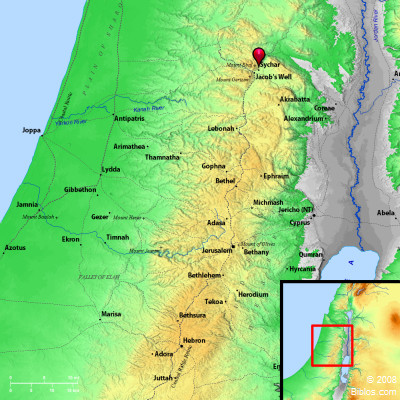
John 4: 27-42 Some Question / Some Tell It

According to John 4:27-42
Disciples Question While The Samaritan Woman Shares What She Knows
Verses 27-30
Disciples Question Jesus' Scruples
Verses 31-38
Jesus Teaches the Disciples
Verses 39-42

The woman affects her town

27. At this point His disciples came, and they were amazed that He had been speaking with a woman, yet no one said, "What do You seek?: or "Why do You speak with her?" 28. So the woman left her water pot, and went into the city and said to the men, 29. "Come, see a man who told me all the things that I have done; this is not the Christ, is it?” 30. They went out of the city, and were coming to Him.

31. Meanwhile the disciples were urging Him, saying, “Rabbi, eat.” 32. But He said to them, “I have food to eat that you do not know about.” 33. So the disciples were saying to one another, “No one brought Him anything to eat, did he?” 34. Jesus said to them, “My food is to do the will of Him who sent Me and to accomplish His work. 35. "Do you not say, ‘There are yet four months, and then comes the harvest’? Behold, I say to you, lift up your eyes and look on the fields, that they are white for harvest. 36. "Already he who reaps is receiving wages and is gathering fruit for life eternal; so that he who sows and he who reaps may rejoice together. 37. "For in this case the saying is true, ‘One sows and another reaps.’ 38. "I sent you to reap that for which you have not labored; others have labored and you have entered into their labor.”

39. From that city many of the Samaritans believed in Him because of the word of the woman who testified, “He told me all the things that I have done.” 40. So when the Samaritans came to Jesus, they were asking Him to stay with them; and He stayed there two days. 41. Many more believed because of His word; 42. and they were saying to the woman, “It is no longer because of what you said that we believe, for we have heard for ourselves and know that this One is indeed the Savior of the world.”

COMMENTARY


Verses 27-30

27. At this point His disciples came: Remember the disciples were in town getting food. They missed the whole conversation Jesus had with the woman. They return to where they left Jesus which was by the well for Him to rest and refresh Himself. Then, they were amazed that He had been speaking with a woman. The disciples reaffirm the gender issue that Jesus overcame which led to His ἐγὼ εἰμι proclamation in verse 26. This phrase also states the fact that the disciples were 'amazed. The Greek word is ἐθαύμαζον 3rd Person Plural Imperfect Active Indicative verb from θαυμάζω meaning: to marvel, amaze, to admire or be astonied (astonished). The same from of this same verb appears in John 17:5 when the Jews are reported to have marvel at Jesus uneducated wisdom. Yet no one said, "What do You seek?: or "Why do You speak with her?" As they were approaching them at the well, they asked these questions. The same Greek word τί (an interrogative pronoun from τίς ) is translated here as either 'what?,' 'why?,' or 'which?' They were inquiring after what He 'desired,' 'endeavored,' or 'sought.' Since they were just arrived it was obvious that they missed a major event which culminated in Jesus speaking with this woman alone. "They were astonished to see Him talking to a woman; for remember according to Jewish law, no Rabbi must ever hold conversation with a woman alone (Morgan, G. Campbell, The Gospel According to John, Revell Company, USA , p. 77)." It would appear as they disciples came closer to them at the well, the woman left, forgetting the reason she originally came to the well. For the woman left her water pot, and went into the city and said to the men, 29. "Come, see a man who told me all the things that I have done; this is not the Christ, is it?” The impact of Jesus revealing His identity, ἐγὼ εἰμι , had a profound effect on the woman. She, who, was alone largely because of her life choices, was now motivated to lay all the stigma aside and be a spokesperson to her city. This is the consistent behavior of one having received a revelation of Jesus. 30. They went out of the city, and were coming to Him. Wow, if only I had that gift of evangelism or leadership. If only I could speak of Him in such a way that a whole city would trust me to come to Him. What did she say to the MEN of the city? She bid them to come. She spoke of Him perceiving all the the things she had done. She spoke of Him being the Christ, Messiah. The English translates the bidding regarding Jesus' as the Messiah as a question. In our evangelistic attempts, so we call them, do we ask questions and leave them unanswered?


Verses 31-38

31. Meanwhile the disciples were urging Him, saying, “Rabbi, eat.” Now that the woman was gone and all the gender issues resolved, lets replenish ourselves. 32. But He said to them, “I have food to eat that you do not know about.” Here we have our favorite Greek conjunction that draws contradiction. The disciples were urging, BUT Jesus said. 33. So the disciples were saying to one another, “No one brought Him anything to eat, did he?” Amazing how we think, like the disciples, that we can be in the presence of Jesus and carry on a secretive conversation. Do we not know that He knows our thoughts and the intentions of our hearts. He, as in this case of the disciples knows how well we receive His teaching. Yet, we cannot call Him rude, prying, snoopy or nosy. He cares for us and His primary objective for His caring is that we know Him. Therefore 34. Jesus said to them, “My food is to do the will of Him who sent Me and to accomplish His work. When the disciples are pondering where Jesus got His food. Jesus leaps into a deep issue of the importance of life. Accomplishing the work of God is as important as food. Here is His basis presentation of obeying God being juxtaposed to providing for this life even in the basic sustenance items as food and water. He will describe this juxtaposition many times as we walk with John through his gospel. For now it is important for the disciples to understand that they are "...not (to) say, ‘There are yet four months, and then comes the harvest’? Behold, I say to you, lift up your eyes and look on the fields, that they are white for harvest. 36. "Already he who reaps is receiving wages and is gathering fruit for life eternal; so that he who sows and he who reaps may rejoice together. 37. "For in this case the saying is true, ‘One sows and another reaps.’ 38. "I sent you to reap that for which you have not labored; others have labored and you have entered into their labor.” In their understanding of accomplishing the will of God, they are not to be concerned with the seasons. We are to be busy now. They, as He is, are to be about the task of accomplishing the work of God. In that they are not to compare their work or their rewards with others. Each one has his task and will get his reward. The Apostle Paul also expands on this subject in his letter to the Corinthians by encouraging his followers not to deify one teacher or apostle over another. 1 Corinthians 3:21-23 "So then let no one boast in men. For all things belong to you, whether Paul or Apollos or Cephas or the world or life or death or things present or things to come; all things belong to you, and you belong to Christ; and Christ belongs to God."


Verses 39-42

39. From that city many of the Samaritans believed in Him because of the word of the woman who testified, “He told me all the things that I have done.”
Isn't it amazing what a simple testimony, a life story, can do to influence people. What is your story? And, how is it influencing people around you? The half-breed social outcast of a woman told her story and many of the people in her city believed in Jesus. Think with me for a moment. Can you imagine what the people of the city thought when she said, "He told me all the things that I have done"? Remember, this woman was a ......... and a .......... and she did ............. and ............. and she said ............. and ............ about .............. The people of the city were probably embarrassed with her sharing some of her intimate events. Her so-called husband probably could not believe that was airing out their dirty laundry. What's your story? Is colored with dirt? with shameful acts? with embarrassing moments producing jaw dropping responses? If told, it might be embarrassing to you, your family or your friends, but it would not be embarrassing to Jesus for He did NOT condemn or scold her. Therefore, He will not scold you. It pleases Him for us to respond in the same manner that this half-breed outcast woman responded. Tell your story then invite your audience to meet Him for themselves. 40. So when the Samaritans came to Jesus, they were asking Him to stay with them; and He stayed there two days.Be it known that there is power in one who is willing to be known by Jesus and is vulnerable to Him revealing all things. This woman's words change the life of her city that was lost and without hope from its history. Jesus, through the woman, was now a welcomed guest and they asked Him to stay and He did. 41. Many more believed because of His word; 42. and they were saying to the woman, “It is no longer because of what you said that we believe, for we have heard for ourselves and know that this One is indeed the Savior of the world.” In this statement which covers two verses, we have a climatic theological statement that supports the γώ εμι of verse 26 in the preceding blog post. Jesus is the I AM, the One, the Savior of the world and this declaration is spoken by non Jewish Samaritans who were definitely outside the fold of kosher religiosity. Be sure not to miss that the source of the people's belief transcended the words of the woman as if from a third party. Their belief, which is paramount for us, is a result of hearing and knowing for themselves. What have you heard? And, who have you heard it from? If it is from men or women, then you need to question its validity. If it is from Jesus, the Bible, then you have found the TRUTH. I hope that those men and women who speak to you, speak in such a way as to line up with the Truth. THIS ONE IS INDEED THE SAVIOR OF THE WORLD.

SUMMARY

Compare and contrast the woman and the disciples. The disciples have
questions of stature and social protocol but are afraid or embarrassed to asked them. The Woman just experienced a time of candid Q&A with Jesus but resultantly forgot why she came to the well and ran off into the city. She leads a city out to Jesus and they believe. The Disciples remain a questioning bunch of followers, at least for now.

In large part of God's revelation to us, He reveals His name. His name is precious to Him and should be revered by us. As Jesus speaks the name of God and embraces it regarding His identity, all of Scripture is being unraveled. In the Old Testament we find the original pattern of God's name in the Hebrew. It was given to Moses on Mount Sinai and protected through the centuries. When Solomon built the Temple for the Lord, it was a Temple for the NAME of the Lord. “Behold, I intend to build a house for the name of the LORD my God, as the LORD spoke to David my father, saying, ‘Your son, whom I will set on your throne in your place, he will build the house for My name.’"- 1 Kings 5:1. "The LORD said to him, 'I have heard your prayer and your supplication, which you have made before Me; I have consecrated this house which you have built by putting My name there forever, and My eyes and My heart will be there perpetually.'" - 1 Kings 9:3. The NAME not only refers to the person of the Lord, it refers to the presence of the Lord. Therefore, when you revere His NAME and speak His NAME, you are not only addressing Him, He is in your presence. He is with you. He is with .... He is....


If we can help in anyway with your journey with Jesus, let us know by emailing us at: FLSMinistries@bellsouth.net