Showing posts with label religion. Show all posts

Monday, June 20, 2011

Scene 3: John 9:24-34 Act 9 Scene 3

So a second time they called the man who had been blind, and said to him, “Give glory to God; we know that this man is a sinner.” Religion is so staunch, yet so steeped in error, that it boldly proclaims is folly. If we follow the hard headed and hard hearted plight of these Jews we will be bold in our knowledge while still not able to explain life's events. If we follow the healed young man we will be humble and thankful, articulating our lack of knowledge while firmly resting on the working of God in his life. He then answered, “Whether He is a sinner, I do not know; one thing I do know, that though I was blind, now I see.” This is the power of first hand experience of a miracle. No matter how others misunderstand you or say that they understand you, you can always rest on the experiential knowledge of the change that God brought into your life. The deeply personal 'call' on ones life will sustain him through all that life, friends, the world and the enemy came attempt to succumb. Personal encounters with God trump everything and everyone for HE IS. So they said to him, “What did He do to you? How did He open your eyes?” Yes. More religious questioning. Tell us again, what and how. Be careful how much detail you require before you declare trust, belief, understanding and empathy. Religion will never cease to pound out the details of a 'God experience,' but not for the purpose of accepting the truth. It seeks an explanation in order to trump of charges of falsehood and disbelief. Such inquisition proves fruitless when religion encounters God at work. He answered them, “I told you already and you did not listen; why do you want to hear it again? You do not want to become His disciples too, do you?” The compose and candor of this man is truly remarkable. Here he is, a man who moments ago was a beggar and an outcast of all Judaic society, standing restored from all abnormalities which supported his ostracized state and truthfully engaging a sector of Judaism that has never known outcast and abnormality. Yet, the 'nothing has never been wrong with me' religious leaders did not have ears to hears. They reviled him and said, “You are His disciple, but we are disciples of Moses. “We know that God has spoken to Moses, but as for this man, we do not know where He is from.” How dare this man call into question our allegiance to Moses. I wonder what Moses would say about that 'righteous indignation'? Moses would say, when asked if man should follow him or the Lord Jesus Christ, he would prostrate himself and once again say, "Who am I compared to the great I AM, YHWH, ἐγὼ εἰμι?" The man answered and said to them, “Well, here is an amazing thing, that you do not know where He is from, and yet He opened my eyes. “We know that God does not hear sinners; but if anyone is God-fearing and does His will, He hears him. “Since the beginning of time it has never been heard that anyone opened the eyes of a person born blind. “If this man were not from God, He could do nothing.” The heal man had great insight. He knew their belief struggles rested on what did not know or accept. Yet, Jesus restored this man's sight which is unmistakably undeniable. Then the man acknowledges the holiness of God by saying that God does not hear sinners. Sin separates man from God. BUT....... IF...... ANYONE....... fears God and obeys Him......... THEN.......... HE HEARS. Reverence and obedience is the remedy for religion which is often idolatry and humanism. They answered him, “You were born entirely in sins, and are you teaching us?” They could not and many remain that cannot accept the great restoration and healing of God. It does not matter how you were born and who were your parents. Fear God, obey Him and He will hear you! You will confound those steeped in centuries of religion. They will not know what to do with you. So they put him out. They called him in and now they throw him out. They simply cannot make up their minds. They, like many who do not know God yet are deeply entrenched in religion, simply do not know what to do with someone who has experienced God and has new life.

APPLICATION
- Fear God for 'Thous shall not have any other gods before Me."
- Obey Him. It is better to obey God rather than man. Man looks at the outward appearance, but God looks at the heart.
- No amount of religion can deal with sin. Only the regenerating work of God through the shed blood of the Lord Jesus Christ can deal with (atone) for sin.
- Had a life change? Don't be disturbed that religion and the religious question you, don't understand you and don't want to have anything to do with you. It is Jesus that they are rejecting.

CONTACT INFO:
Family Life Style Ministries, Inc.
Email: FLSMinistries@bellsouth.net
Facebook: Family Life Style Ministries
Twitter: flsministries

Thursday, May 5, 2011

John 9:13-23 Act 9: Scene 2

Act 9: Scene 2
John 9, Verses 13-23


They brought to the Pharisees the man who was formerly blind. Now it was a Sabbath on the day when Jesus made the clay and opened his eyes. Remember the Pharisees? They are prime specialists of antagonism with the result lead astray effectiveness. The timing is perfect for their best day of antagonism: it was the Sabbath. Then the Pharisees also were asking him again how he received his sight. When you get an answer that you did not want or did not expect, you ask again. And he said to them, "He applied clay to my eyes, and I washed, and I see." A simple answer to a simple, yet complex question. Therefore some of the Pharisees were saying, "This man is not from God, because He does not keep the Sabbath." The Pharisee's reasoning was limited, for they were stuck on the issue of the Sabbath. They rose this issue, according to John's Gospel, back in Chapter 5 when Jesus directed the lame man to pick up his bed and walk (on the Sabbath). There a man of some 38 years was walking. Now a blind man was seeing. They failed to see beyond their religion to see the miracle of life change. They were ... but now they ...! Jesus clearly broke the Sabbath, but He fulfilled the goodness and compassion of His Father, Almighty God, YHWH. But others were saying, "How can a man who is a sinner perform such signs?" And there was a division among them. This issue of the Law of God or the Compassion of God causes division to this day. So they said to the blind man again, "What do you say about Him, since He opened your eyes?" They asked the man again. His answer is of a deeper nature. It ventures from the previous 'what He did' into the 'who He is.' One's being always further explains issues previous decided and limited to one's actions. And he said, "He is a prophet." His answer was clearly more definitive. It was widely accepted in Judaism that if an indisputable miracle it was "prima facie evidence" that divine commission was involved. Therefore, the divine commission would place Him above any human legal authority. Jesus was a prophet. The Jews then did not believe it of him, that he had been blind and had received sight, until they call the parents of the very one who had received his sight, So they chose to discount the miracle by discounting the man. Thereby discounting the miracle. They called his parents. and questioned them saying, "Is this your son, who you say was born blind? Then how does he now see?" The interrogation of the parents. If they could prove that the blindness was not from birth, then they could dismiss the validity of the miracle. So, what do you say, Dad? What do you say, Mom? Was he born blind? His parents answered them and said, "We know that this is our son, and that he was born blind; but how he now sees, we do not know; or who opened his eyes, we do not know. Ask him; he is of age, he will speak for himself." His parents said this because they were afraid of the Jews; for the Jews had already agreed that if any confessed Him to be Christ, he was to be put out of the synagogue. For this reason his parents said, "He is of age, ask him." They corroborated two facts: 1. This is our son, 2. He was born blind. They did not know 'how' and they refused to venture a guess. They were afraid, but they, nevertheless, did the right thing. They insisted that their son speak for himself for he was of age.

CONCLUSION
What is the difference between 'religion' and 'Christianity?' Which one is characterized by rules and regulations? Which one is characterized by a relationship?

Can you see beyond the Law of God to the Compassion of God?

Who do you say Jesus is?


Contact Information:
Family Life Style Ministries, Inc.
Email: flsministries @bellsouth.net
Twitter: flsministries
Facebook: Family Life Style Ministries


Thursday, December 9, 2010

John 6:59-71 Grumbling, Stumbling and a Profession

Paragraphs:
Verse 59 Setting of the Scene
Verses 60-65 Followers Grumble and Stumble
Verses 66-71 Peter Gets It Right


COMMENTARY

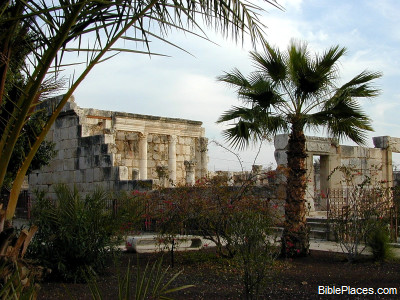
59 These things He said in the synagogue as He taught in Capernaum. The synagogue was the Jewish center of local religious life. Capernaum, as y
ou might remember, is Peter's home. The things said refer to the previous text in which Jesus proclaims His deity and reveals their grumbling. He was not hiding or trying to be incognito. He said these things while at the center of Jewish religiosity. Therefore the Old Testament applications were completely understood by his audience.

60 Therefore many of His disciples, when they heard this said, "This is a difficult statement; who can listen to it?" The plight of "total group of adherents" reflects the mentality of the general human population. What they thought was immediately said. They heard, they concluded, then, they spoke. If we do not understand, we might simply do not want to understand. Therein, validating one of mankind's ultimate faults in that we think we know it all. Be careful of how you verbalize your doubts. 61 But Jesus, conscious that His disciples grumbled at this, said to them, The word translated 'conscious' is simply an awareness or familiarity. It is not a deep insightful perception of their inward being. They voiced there disdain and Jesus had thoughts about it. "Does this cause you to stumble? 62 "What then if you see the Son of Man ascending to where He was before? 63 "It is the Spirit who gives life; the flesh profits nothing; the words that I have spoken to you are spirit and are life. 64 "But there are some of you who do not believe." Do you understand what Jesus previously said that resulted in their grumbling? Do you understand the meaning of 'eating His flesh' and 'drinking His blood' (6:53)? How then will you be able to grasp the significance of His burial, resurrection and ascension? They did not know. They grumbled which resulted in stumbling. The Spirit is the transmitter of life. Life is not attained by eating. For Jesus knew from the beginning who they were who did not believe, and who it was that would betray Him. "Jesus had given ample opportunity for faith to all those who followed him; yet from the beginning his spiritual discernment made him aware of those whose faith was genuine and those whose attachment was only superficial (The Expositor's Bible Commentary, Frank E. Gaebelein, Ed., Vol. 9, 1981, p. 79)." 65 And He was saying, "For this reason I have said to you, that no one can come to Me unless it has been granted him from the Father." This statement should not surprise us. For, He is simply referring all of His attention to His Father. This made it well know to His followers in Capernaum, that He is about His Father's business and it is all about His Father (6:37 and 44). Simply, the Father grants access to the Son (The Word, 1:1) and the Spirit gives life.
66 As a result of this many of His disciples withdrew and were not walking with Him anymore. All this talk about the Father and the Spirit caused many of His followers to leave. The crowd is dwindling. They could not force themselves to understand what they could not understand. They could not all this talk of the supremacy of the Father and the Spirit in faith and life. They did not want to give up their man centered religion.
67 So Jesus said to the twelve, "You do not want to go away also, do you?" The crowd is gone and now Jesus asks the pointed question. What about you? He asked it of them and He asks it of you. How will you answer? 68 Simon Peter answered Him, "Lord, to whom shall we go? You have words of eternal life. 69 "We have believed and have come to know that You are the Holy One of God." Peter got this right. Peter is often viewed as the leader of the twelve. The mouth of the disciples. Well, he got this one right. His answer is full of eternal profundity. 1. Jesus is IT. There is no other. 2. The article is obviously missing in 'words of eternal life." Thereby striking down any notion of a saving recantation. Jesus is the Word. 3. Believed (πεπιστεύκαμεν). 4. Became confident (ἐγνώκαμεν) in trusting that Jesus was the ὁ ἅγιος τοῦ θεοῦ. If you don't know any Greek, that phrase, ὁ ἅγιος τοῦ θεοῦ, is one worth knowing. Peter got it right. 70 Jesus answered them, "Did I Myself not choose you, the twelve, and yet one of you is a devil?" 71 Now He meant Judas the son of Simon Iscariot, for he, one of the twelve, was going to betray Him. It is amazing. That on the heels of such a right declaration of the Truth, that betrayal lurks. Jesus chose the twelve, but one, Judas Iscariot also chose to betray.


SUMMARY

As we wrap up Jesus' time in Capernaum, we are exposed with truth covering Jesus being the Bread of Life. As the crowd and the twelve were presented with a choice of response, we are also given an opportunity to choose. Many will abandon Him, but you don't want to go away also, do you?' Choose you this day.

The Father grants. The Son 'speaks.' The Spirit gives eternal life. There is no human effort that surpasses the call of God, the Word of God and the Life of God. Jesus will soon present Himself with another by stating that He is the Way, the Truth and the Life. Does this dependence on God for your life make you withdraw or draw near to God?

Several years ago now, I was spontaneously asked by a dear mentor, to provide a group with the difference between 'religion' and 'Christianity.' I came up with this on the spur of the moment. Religion is man reaching up to God. Christianity is God reaching down to man. Are you busy in your religion? So busy going nowhere? Trust, believe, know the Holy One of God (ὁ ἅγιος τοῦ θεοῦ). Life will then have purpose and direction.

CONTACT INFORMATION

If you need help dealing with your questions without withdrawing from the Holy One of God, then we are here to help.

Family Life Style Ministries, Inc. is a 501(c)(3) ministry of the Lane family based in Griffin, Georgia.

Email: flsministries@bellsouth.net

Twitter: flsministries

FaceBook: Family Life Style Ministries


Wednesday, August 18, 2010

John 6:1-14 Are you hungry? Have a seat.

According to John
Chapter 6, Verses 1-14

After these things Jesus went away to the other side of the Sea of Galilee (or Tiberias). A large crowd followed Him, because they saw the signs which He was performing on those who were sick. Then Jesus went up on the mountain, and there He sat down with His disciples. Now the Passover, the feast of the Jews, was near. Therefore Jesus, lifting up His eyes and seeing that a large crowd was coming to Him, said to Philip, “Where are we to buy bread, so that these may eat?” This He was saying to test him, for He Himself knew what He was intending to do. Philip answered Him, “Two hundred denarii worth of bread is not sufficient for them, for everyone to receive a little.” One of His disciples, Andrew, Simon Peter’s brother, said to Him, "There is a lad here who has five barley loaves and two fish, but what are these for so many people?” Jesus said, “Have the people sit down.” Now there was much grass in the place. So the men sat down, in number about five thousand. Jesus then took the loaves, and having given thanks, He distributed to those who were seated; likewise also of the fish as much as they wanted. When they were filled, He said to His disciples, “Gather up the leftover fragments so that nothing will be lost.” So they gathered them up, and filled twelve baskets with fragments from the five barley loaves which were left over by those who had eaten. Therefore when the people saw the sign which He had performed, they said, “This is truly the Prophet who is to come into the world.”

COMMENTARY
To begin our discussion of this familiar story regarding a miracle of Christ, let me challenge you to think about your personal perspective of this event. As you think of a mountainside with Jesus feeding thousands of people, what do you see through your minds eye? What role are you playing or from which angle are you viewing in this familiar age-old story? There are three possibilities: 1. the view of our Lord in which you see the faces of the disciples and the faces of the crowd; 2. The role of a disciple in which you see the face of Jesus, the faces of the other disciples and the faces of the crowd; 3. The role of one in the crowd, in which you see the face of Jesus, the faces of the disciples, but in this role you see the back of the heads of the crowd, not the faces; Finally, 4. You view this story totally objectively in which you see everyone's face without seeing the back of anyone's head. I am asking you to consider your disposed perspective for it will determine your ability to interpret the miracle. We will revisit these perspectives after we discuss the text in the format of who is speaking.
Although our text, verses 1-14, is one paragraph in the Greek, John narrates this story with a theatrical style. He gives his perspective of the story by laying out the sitz im leben in the first 4 verses. Jesus speaks in verses 5-6. Philip answers in verse 7. Andrew speaks in verse8-9. Jesus gives direction in verse 10. Verses 11 describes the typical role of the pre-meal blessing. Verse 12 has Jesus speaking again. Verse 13 lets us know that miracle took place. The crowd speaks in verse 14.
1.
After these things Jesus went away to the other side of the Sea of Galilee (or Tiberias). 2. A large crowd followed Him, because they saw the signs which He was performing on those who were sick. 3. Then Jesus went up on the mountain, and there He sat down with His disciples. 4. Now the Passover, the feast of the Jews, was near. John begins this paragraph by referring to 'after these things.' It is beneficial to remember that this According to John account of the life of Christ is not in strict chronological order. However, John had a reason to have this account to immediately follow Jesus healing and then His self defense following the Jews placing a death warrant on His head. Is Jesus on the run? Chapter 5 has Jesus Jerusalem, some 26 miles from Galilee, for the Passover. With this also being a time of the Passover, it is thought that at least a year has passed between chapter 5 and chapter 6. Do miracles, heal sick, and a crowd will follow you, even to the other side of the Sea. Here we have a small glimpse into the masses, at least in the Galilean area, beginning to abandon religious traditions to follow him. The Greek word translated 'crowd' is ὄχλος meaning: A. a crowd, throng, the mass of the soldiers, in numbers (for an army), undisciplined masses, camp-followers; 1. in political sense, populace, mob, and popular assemblies (in a contemptuous sense), already in the mouths of the people; 2. generally, mass, multitude: in pl., the masses. B. annoyance, trouble, to give trouble, to be or become troublesome. This is a crowd, according to John, was a impetuous group that is getting into their recovery time. The use of this term lays a foundation for the disciples to the people, the ὄχλος, with a stiff arm approach.Jesus and his disciples reach a resting spot near the top and sit down, thereby giving the crowd a chance to catch up. The Greek word translated 'mountain' is ὄρος which is usually not translated 'hill.' This word, ὄρος, is most notably use in the LXX's translation of the flood residing "The water decreased steadily until the tenth month; in the tenth month, on the first day of the month, the tops of the mountains became visible (Genesis 8:5)."
5. Therefore Jesus, lifting up His eyes and seeing that a large crowd was coming to Him, said to Philip, “Where are we to buy bread, so that these may eat?” 6. This He was saying to test him, for He Himself knew what He was intending to do. Jesus sees the crowd, the ὄχλος, coming to infringe on their time away. His 'seeing' them has nothing to do with His introspection of them, thereby seeing their deep, below the surface need. The Greek means to 'gaze at, behold, mostly with a sense of wonder' or ' contemplate.' You might imagine Jesus rubbing His chin as He views the crowd. He is marveling at their persistence in abandoning food preparation. In His genuine marvel of the crowd, Jesus seizes a teachable moment and asks Philip a question. Remember they are on the 'up a mountain' and on the other side of the Sea of Galilee. 'Where' might be a ridiculous negative question. 7. Philip answered Him, “Two hundred denarii worth of bread is not sufficient for them, for everyone to receive a little.” Philip, unable to directly answer the 'where' question, poses an answer to the ridiculous question of 'how.' Philip basically says, 'I do not have a clue." Even if we knew 'where' we do not have the capability. "Two hundred denarii:" how much is that? Two hundred denarii is approximately eight months wages. That is the end of Philip's dialogue in this story. I wonder if he past Jesus' test. 8. One of His disciples, Andrew, Simon Peter’s brother, said to Him, 9. "There is a lad here who has five barley loaves and two fish, but what are these for so many people?” Here comes Andrew, who is known for bringing people to Jesus. He has been observant and active as he offers a solution (as meager as it may be) to the crowd's genuine need. Andrew was watching the crowd, listening to Jesus and Philip and looking for a solution. He found the boy and brought him to Jesus. The text, ἔστιν παιδάριον ὧδε, could read 'Here is a lad' or 'A lad is here.' Andrew is a busy disciple. The lad with barley loaves and fish was enough for Jesus to get started. Enough verbal instruction, it was time to meet the needs of the 'crowd' who were hungry. 10. Jesus said, “Have the people sit down.” Now there was much grass in the place. So the men sat down, in number about five thousand. 'Have a seat.' 'Rest yourselves.' 'Let us serve you.' 'Don't worry.' 'I will take care of you.' 'You are not an imposition.' 'You are our guests.' Jesus, through His disciples, directs the immediate affairs of more than 5,000 people for there were 5,000 men which does not include women and children. The photo at the top of this post has about 5,000 people pictured. 11. Jesus then took the loaves, and having given thanks, He distributed to those who were seated; likewise also of the fish as much as they wanted. There it is. The model for us to 'give thanks' for our food. He did, we should. Other than that, just an interesting thought here. If they were NOT seated, i.e. did NOT obey Jesus initial direction, would they have been fed? Interesting. 12. When they were filled, He said to His disciples, “Gather up the leftover fragments so that nothing will be lost.”13. So they gathered them up, and filled twelve baskets with fragments from the five barley loaves which were left over by those who had eaten. Here we go. The result of a miracle. The food multiplied for there to be enough to eat and lots of barley loaves left over. I have actually heard this being a miracle of the people's compassion. In that the ὄχλος had the food with them all the time and now they were just willing to share it with their fellow ὄχλος. That might be so if we did not have Jesus distributing. Therefore, regardless of what was left over, there was enough to be distributed. I don't know about you, but I would have an impossible time breaking 5 barley loaves into over 5,000 pieces. And then break 2 fish into over 5,000 pieces. They were filled. 14. Therefore when the people saw the sign which He had performed, they said, “This is truly the Prophet who is to come into the world.” Even the people knew a miracle, or sign, had taken place. Their response was a declaration. Limited as it may be, it was declarative.


SUMMARY

The Feeding of the 5,000 is one event that appears in all four gospels: Matthew 14:13-21; Mark 6:30-44; Luke 9:10-17 and John 6:1-13. John brings out the initiating compassion of Christ in recognizing the need of the multitude. Matthew, Mark and Luke note that the disciples came to Jesus with a suggestion of how to handle this feeding dilemma.

What is your perspective of this miracle: through Jesus' eyes; the disciples' eyes; the crowd's eyes, or your own objective theatrical view? This is NOT a play! Is Christianity something you observe, in your family or friends, from an objective perspective, like a play or movie, without any participation or life change? Let me suggest that you view this story from either the crowd's perspective or the disciple's perspective. As a part of the crowd, you follow Jesus, you obey His commands, you allow Him to meet your needs, you acknowledge His miracles on your behalf and you declare who He is and what He has done. As a disciple, you journey WITH Him, you rest WITH Him, you are tested by Him, you speak WITH Him, you work WITH Him, you serve WITH Him and you obey Him. Let me suggest that you begin to participate in Christianity. Are you hungry? Blessed or happy are those who hunger and thirst for righteousness, for they will be filled or satisfied.

There is one facet of Jesus life at this time that is strikingly missing from this story: the religious antagonists. Therefore, since all people mentioned in this story were participants, then all people, religious antagonists included, would be classified as spectators who have objective perspectives. They were not there. They read this story in the local Galilean Parchment Times. Religion is spectator based. Christianity is participant based. Question: What do you see here? Are you in the story? Or, are you just reading the story?


Need help with your journey?

Email: flsministries@bellsouth.net

Twitter: flsministries

Facebook: Family Life Style Ministries, Inc.


Note: The image above is from Switchfoot, a contemporary, somewhat hard rock, Christian band. I found this photo of them while searching for groups picturing 5,000 people.


Tuesday, June 8, 2010

John 5:19-47 Religion vs. Relationship

John 5:19-47
Therefore Jesus answered and was saying to them,
“Truly, truly, I say to you, the Son can do nothing of Himself, unless it is something He sees the Father doing; for whatever the Father does, these things the Son also does in like manner. “For the Father loves the Son, and shows Him all things that He Himself is doing; and the Father will show Him greater works than these, so that you will marvel. “For just as the Father raises the dead and gives them life, even so the Son also gives life to whom He wishes. “For not even the Father judges anyone, but He has given all judgment to the Son, so that all will honor the Son even as they honor the Father. He who does not honor the Son does not honor the Father who sent Him. “Truly, truly, I say to you, he who hears My word, and believes Him who sent Me, has eternal life, and does not come into judgment, but has passed out of death into life. “Truly, truly, I say to you, an hour is coming and now is, when the dead will hear the voice of the Son of God, and those who hear will live. “For just as the Father has life in Himself, even so He gave to the Son also to have life in Himself; and He gave Him authority to execute judgment, because He is the
Son of Man. "Do not marvel at this; for an hour is coming, in which all who are in the tombs will hear His voice, and will come forth; those who did the good deeds to a resurrection of life, those who committed the evil deeds to a resurrection of judgment.
“I can do nothing on My own initiative. As I hear, I judge; and My judgment is just, because I do not seek My own will, but the will of Him who sent Me.
“If I alone testify about Myself, My testimony is not true. “There is another who testifies of Me, and I know that the testimony which He gives about Me is true. “You have sent to John, and he has testified to the truth. “But the testimony which I receive is not from man, but I say these things so that you may be saved. “He was the lamp that was burning and was shining and you were willing to rejoice for a while in his light.
“But the testimony which I have is greater than the testimony of John; for the works which the Father has given Me to accomplish—the very works that I do—testify about Me, that the Father has sent Me. “And the Father who sent Me, He has testified of Me. You have neither heard His voice at any time nor seen His form. “You do not have His word abiding in you, for you do not believe Him whom He sent. “You search the Scriptures because you think that in them you have eternal life; it is these that testify about Me; and you are unwilling to come to Me so that you may have life.
“I do not receive glory from men; but I know you, that you do not have the love of God in yourselves. “I have come in My Father’s name, and you do not receive Me; if another comes in his own name, you will receive him. “How can you believe, when you receive glory from one another and you do not seek the glory that is from the one and only God?

“Do not think that I will accuse you before the Father; the one who accuses you is Moses, in whom you have set your hope. “For if you believed Moses, you would believe Me, for he wrote about Me. “But if you do not believe his writings, how will you believe My words?”


COMMENTARY
John 5:19-47
The beginning of this section, in According to John, introduces Jesus responding to the Jews that were now seeking all the more to kill... HIM. They, as a result of Him claiming God to be His Father, stepped up the level of intensity from persecution to out right premeditated murder. Jesus, with the ink now fresh on wanted posters, was no longer a pest but a problem and threat to their......... position, power, money, prestige, heritage, national security, etc. Hence, 'Let's kill him.' Be no mistaking, God was at the center of their religious lives but they neglected the most important issue.
19. Therefore Jesus answered and was saying to them This whole section is Jesus speaking. He 'answered' them even though they did NOT ask a question. Let it be noted before we go any further that Jesus, the Son of God, not only answers your questions, He knows what you are questioning even though you are confident of your statement that is not yet a question. That is why the text of this section is overwhelmingly red, which is the pattern of major translations demarcating Jesus speaking. As we look at Chapter 5 as a whole, we note that it has 47 verses. The first 18 verses tell of the multifaceted cast in the situation that brings Jesus to speak of His very personal relationship with His Father. The last 28 verses speak of the divine relationship. “Truly, truly, I say to you, the Son can do nothing of Himself, unless it is something He sees the Father doing; for whatever the Father does, these things the Son also does in like manner. Don't you wish all earthly father/son relations worked out in this manner? Fathers, keep that in mind as we move through this section. Sons, pattern your life-long relation with your earthly father as Jesus did with His heavenly Father.
20. “For the Father loves the Son, and shows Him all things that He Himself is doing; and the Father will show Him greater works than these, so that you will marvel. Interesting to note that one of the primary benefits of the Father loving and involving the Son is that WE may marvel. Yes, this is a relationship to behold. This relationship is a pattern for all Father / Son relationships. The Greek word
θαυμάζητε translated 'marvel' in the New American Standard also depicts respect, honor, marvel, worship, wonder, admire and astonishment. The relationship between the Father and the Son provides an illustration that defines the object of our worship. 21. “For just as the Father raises the dead and gives them life, even so the Son also gives life to whom He wishes. Note that the Father raises from the dead. This is key regarding Jesus' resurrection. His Father called Him forth. The resurrection of Jesus Christ will soon be regarded as the ultimate approval of His Father for the redemption of sin. Jesus is about the business of life and He has the authority or permission to bestow life on whoever He wishes. 22. “For not even the Father judges anyone, but He has given all judgment to the Son, 23. so that all will honor the Son even as they honor the Father. He who does not honor the Son does not honor the Father who sent Him. When you step into a contemporary courtroom, this issue is brought out. The one who is 'honored' is the one who 'judges.' When we address 'your honor' in our courtrooms, we are addressing the judge. Therefore, the Son is the one who judges and is to be honored. His position of honor, however, was given to him by his Father. The Greek word τιμάω translated 'honor' in its various forms in this sentence means "to fix the value or to price." It also means "estimate, value, or esteem." This word is rarely used in the context of an 'award' as something 'to give as an honor.' The issue here is honor. What or who do you honor, or place a high price? 24. “Truly, truly, I say to you, he who hears My word, and believes Him who sent Me, has eternal life, and does not come into judgment, but has passed out of death into life. This is an echo of John 3:16-17. The Son has the authority to proclaim in word, grant eternal life, provide escape from judgment, pull out of death and bring into life. Do you hear? And, to what are you listening? Do you believe? Who do you believe? You have this life (maybe) but do you have the next? Are facing judgment? Or, do you have a personal escort into the courtroom who is also the Judge Himself? Does your life depict death or life? Has there been a "passing" in your life? The Greek word means: to pass from one state of being to another. This is much like passing from North Carolina into South Carolina on the way to Atlanta, Georgia. It is like passing from one subject to another when writing or speaking. The Greeks also frequently attached a nuance of pursuing eagerly to the as you go passing. When you pass from death, there is a leaving of death. When you are now in LIFE, you are forever in LIFE. The Apostle Paul said it this way in his letter to the Colossians (1:13-14) "For He rescued us from the domain of darkness and transferred us to the kingdom of His dear Son, in whom we have redemption, the forgiveness of sins." What have you left? Or, have you just added religion to your present state? Jesus calls you to relocate. 25. “Truly, truly, I say to you, an hour is coming and now is, when the dead will hear the voice of the Son of God, and those who hear will live. 26. “For just as the Father has life in Himself, even so He gave to the Son also to have life in Himself; 27. and He gave Him authority to execute judgment, because He is the Son of Man. Did you catch that authority transfer? The authority to judge is once again articulated to be with the Son. You think that the Old Testament is rough as God judges the enemies of Israel, Israel itself and then Judah? The Son has the authority to execute judgment. The Greek word translated 'execute' means to separate, decide, distinguish, choose, elect, trial or interpret judgment. In the Son we now know the intent and perpetuation of judgment. Apart from the Son there is no understanding or experience of judgment. Why? For in the Son is the antithesis of judgment: LIFE. 28. “Do not marvel at this; for an hour is coming, in which all who are in the tombs will hear His voice, 29. and will come forth; those who did the good deeds to a resurrection of life, those who committed the evil deeds to a resurrection of judgment. Do NOT marvel. Why? We must look to the previous sentence for our immediate answer. For we were previously told in verse 20, that we are to marvel in that the Father shows the Son great works that He is doing and greater works that He, the Son, will do. Here, in verse 28 we are abruptly halted in our growing approval of Jesus to make sure that our homage is clearly defined. In all that follows verse 20 with its call to marvel, somehow, the hearing of the Father's voice and the resurrection of all either to life or to judgment is to supersede that.
30. “I can do nothing on My own initiative. As I hear, I judge; and My judgment is just, because I do not seek My own will, but the will of Him who sent Me. Isn't this great. The only begotten Son, who has been given the authority to judge, is humbly noting that He, Himself owes all that He is to His Father. All that He seeks is in total agreement with His Father. This is the model of all father/son relationships. This was the design, but sin twists and kills its intent and our hope. 31. “If I alone testify about Myself, My testimony is not true. Even though Jesus will one day soon return to His position at the right hand of His Father, he knows and makes sure that we know that this is not about Himself. This is from and about His Father. This is about the Father's kingdom and the Father's reputation. This is the Father's testimony and Jesus tells of His transfer of authority. It is not that Jesus says this about Himself, it is that His Father says this about Him. Therefore all Christians should follow Jesus' example for the basis of their being. It is not what we say about ourselves, it is what our Father says about us that is true regardless of how confident or abased we find ourselves. 32. “There is another who testifies of Me, and I know that the testimony which He gives about Me is true. 33. “You have sent to John, and he has testified to the truth. 34. “But the testimony which I receive is not from man, but I say these things so that you may be saved. 35. “He was the lamp that was burning and was shining and you were willing to rejoice for a while in his light. Jesus, having a very dear and high regard for John (the Baptist), is making sure that He validates John's ministry while qualifying its purpose. John (the Baptist) was sent to be a light shining in the wilderness, and to make a way for the coming of Jesus, the Light (According to John 1:6-8).
36. “But the testimony which I have is greater than the testimony of John; for the works which the Father has given Me to accomplish—the very works that I do—testify about Me, that the Father has sent Me. 37. “And the Father who sent Me, He has testified of Me. You have neither heard His voice at any time nor seen His form. 38. “You do not have His word abiding in you, for you do not believe Him whom He sent. In this section we have a repeated term: testimony or testified. The Greek adds to the repetitiveness by using the same root,
μαρτυρέω, for our English translation of 'witness.' As a result of proclaiming His Father, Jesus makes a striking statement to those known for their religiosity. They: 1. have never heard God's voice, 2. have never seen God, 3. do not have God's word in them, and 4. do not believe God. No wonder they were looking to kill Jesus. He completely tore down all of their professional and credentialed motives, religious traditions, national and ethnic pride. 39. “You search the Scriptures because you think that in them you have eternal life; it is these that testify about Me; 40. and you are unwilling to come to Me so that you may have life. Jesus further reveals their processes based on their motives in that their professional endeavors, even though well intended, provide barriers and distractions from the truth. Religion is a powerful tool in the hands of Satan, the Devil. Here is his main battleground. Satan will let you be ultra-religious, quoting the Bible from Genesis to Revelation including the Apocrypha, in order to keep you from knowing the Father and the Son. For this is eternal life: knowing God. Not just knowing about Him. 41. “I do not receive glory from men; 42. but I know you, that you do not have the love of God in yourselves. 43. “I have come in My Father’s name, and you do not receive Me; if another comes in his own name, you will receive him. 44. “How can you believe, when you receive glory from one another and you do not seek the glory that is from the one and only God? What is His Father's name? YHWH, the I AM. It is an amazing historical study to understand the role of YHWH in Israel's history. They hold it most dear but they forbid themselves to say it. Here, Jesus uncovers their complete disdain for anyone to speak it or to relate to it. That is Jesus' point. He comes in YHWH but they do not receive Him. Therefore, when we distance ourselves from the Father YHWH, we will set up religious standards of our own which are sub-standards and prideful. Our then idolatrous ways, for they are apart from or beneath God, are self gratifying and always changing. Seek God's glory for it will never change. 45. “Do not think that I will accuse you before the Father; the one who accuses you is Moses, in whom you have set your hope. 46. “For if you believed Moses, you would believe Me, for he wrote about Me. 47. “But if you do not believe his writings, how will you believe My words?” Knowing about God is always subservient to knowing God. You must first know God to fully understand all that you know about God. If you do not know God, then all that you know about God will condemn you. If you know God, thereby know His Son, their is therefore now no condemnation.

SUMMARY

Isn't this a delightful story? Jesus is now a wanted man for claiming His lineage and family heritage and he calmly answers a question that was not asked. My concern for us is that we will quickly condemn those who Jesus addresses. But, we must be careful of our own prideful idolatrous ways. How much of your so-called religious life rests on doing things for God? If I had only done the right thing....? Or, If I had only known what to do...? Or, If I had only...? Or, If I had...? Or, If I...? Or, If....? Or,...? Forget all that. Do you know Him? Jesus is the One that you will give an account. Are you ready? If not, today is the day to cease all religious activity and rest on His redemption, His forgiveness, His righteousness, His restoration. Know Him and His Father.