Verses 14-18 Jesus Amazes the Jews ... No Unrighteousness in Him
Verses 19-24 Crowd Misinterprets and Applies the Law
Verses 25-31 Ignorance Fosters Confusion
Verses 32-36 Pharisees: Where is He going?
COMMENTARY
14. But when it was now the midst of the feast Jesus went up into the temple, and began to teach. Verses 1-9 of this chapter have Jesus and His brothers planning the festival trip. Verses 10-13 tell of Jesus and His brothers arriving in Jerusalem but by differing avenues. Verse 14 picks up the story in the middle of the feast, the Feast of Booths or Feast of Dwellings. This feast was based on instruction given to Israel in Leviticus 23 to be observed 15 days after Yom Kippur. The Festival was established to commemorate the 40 year Exodus journey of the children of Israel through the wilderness living in temporary shelters. Gill's Exposition states that this was the fourth day of the Festival falling on the Sabbath. Therefore, Jesus is in the temple and teaching on the Sabbath. "In the Jewish sense of the term, a priest (kohein) is a descendant of Aaron, charged with performing various rites in the Temple, in connection with religious rituals and sacrifices. ... A rabbi is simply a teacher, a person sufficiently educated in halakhah (Jewish Law) and tradition to instruct the community and to answer questions and resolve disputes regarding (Jewish Law)" - http://www.jewfaq.org (Judaism 101). 15. The Jews then were astonished, saying, "How has this man become learned, having never been educated?" The Jews in the Temple listening to a uninvited yet wanted visiting teacher are struck by His content. The Greek word 'educated' is μεμαθηκώς () from μανθάνω meaning: learn or understand. The Liddell-Scott-Jones Lexicon (LSJ) adds the connotation of being 'under persuasion.' Jesus will address this issue of persuasion head-on. 16. So Jesus answered them and said, "My teaching is not Mine, but His who sent Me. 17. "If anyone is willing to do His will, he will know of the teaching, whether it is of God or whether I speak from Myself. 18. "He who speaks from himself seeks his own glory; but He who is seeking the glory of the One who sent Him, He is true, and there is no unrighteousness in Him. Jesus answers the persuasion (education) issue brought up by the Jews by deferring to His Father: 1. My teaching is from my Father; 2. I seek His glory, not my own. Those two methods allow Jesus to self-define a righteous teacher. A teacher is forthcoming with his sources and seeks no prestige of his own. Further, Jesus is willing to share His teaching. The Jewish religion was, and is, a closed circuit of privileges, but Jesus said that obeying God will give you access to His source, the Father.
19. "Did not Moses give you the Law, and yet none of you carries out the Law? Why do you seek to kill Me?" By quoting Moses, on the Sabbath (?), Jesus clearly states that His 'persuasion is not inconsistent with the Law. Jesus presents the Sixth Commandment, through Moses, as authoritative before the Jews. The Jews misunderstood the Sixth Commandment during Jesus time and we have also propagated their confusion. They present their misunderstanding by their answer in the next verse, but what is Jesus allowing to
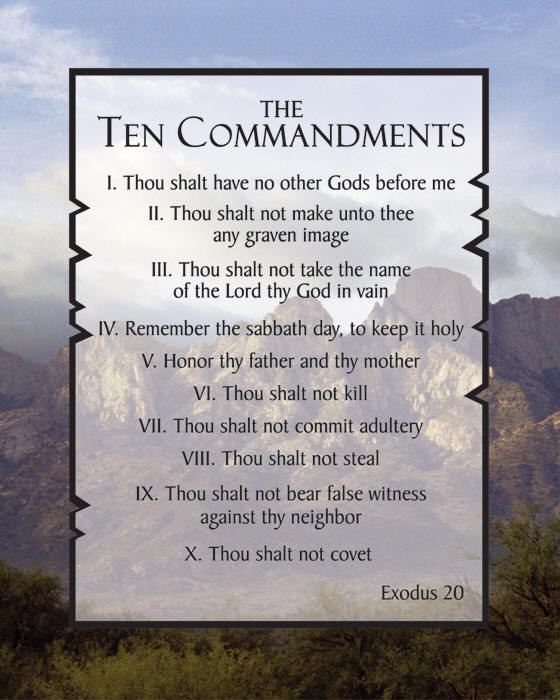 surface here? He is opposing His adversaries by calling them hypocrites regarding the Law. They 'know' it, but they do not 'carry it out.' The Greek word, ποιεῖ from ποιέω, commonly means: to do, make, to keep. Other Greek usages reflect nuances of: create, produce, imply, effect a solution, compose, write, represent, describe, invent, bring about, cause, procure, make, render, deem, do, prepare, or act. 20. The crowd answered, "You have a demon! Who seeks to kill You?" Jesus is addressing 'the Jews' but the crowd answers. The response of the crowd sides with most common misconceptions of Jesus: He is a lunatic. The crowd, somewhat ignorant of the ruler's plan, is asserting His voiced paranoia as resulting from demonic activity manifested in a disordered mind. Keep in mind that Jesus finds Himself in a first person object of the rulers hypocritical profession and the common crowd would never level the charge of 'hypocrisy' against their religious rulers. 21. Jesus answered them, "I did one deed, and you all marvel. 22 "For this reason Moses has given you circumcision (not because it is from Moses, but from the fathers), and on the Sabbath you circumcise a man. 23. "If a man receives circumcision on the Sabbath so that the Law of Moses will not be broken, are you angry with Me because I made an entire man well on the Sabbath? 24 "Do not judge according to appearance, but judge with righteous judgment." Oh, the confidence of knowing that judges judge with righteousness. Jesus is capable of doing such. Why? Our text states that He is One who perfectly represents His Father.
25 So some of the people of Jerusalem were saying, "Is this not the man whom they are seeking to kill? 25 "Look, He is speaking publicly, and they are saying nothing to Him. The rulers do not really know that this is the Christ, do they? 27 "However, we know where this man is from/ but whenever the Christ may come, no one knows where He is from." Confusion verbalized. The people, gathered
 near the Temple in Jerusalem during the Feast of Booths, are questioning their religious authorities regarding Him. The people are noted to wrestle with two issues. They seek to kill Him yet He speaks publicly and they do nothing for they do not know Him. We know where He is from and they, the religious rulers, say no one will no the origins of the Christ. They must not be serious about killing Him and He must not be the Christ. The people's confusion rose from one issue: they did not know the scriptures for themselves. This ignorance led them to subjugation by the religious rulers and to misinterpretation of the scriptures. If they had know the scriptures, they would not be confused. For they would identify the error or presuppositions of the religious rulers and know that the Messiah would not appear out of obscurity. 28. Then Jesus cried out in the temple, teaching and saying, "You both know Me and know where I am from and I have not come of Myself but He who sent Me is true, whom you do not know. 29. "I know Him, because I am from Him, and He sent" The way Jesus addresses the confused crowd, lets us know His priority. From the two issues He asserts in a positive manner, the paramount relation that the crowd must make between Him and the Father. The crowd might have known His genealogy (Line of David, Bethlehem, Mary, Joseph, Christmas, etc.) but He provides opportunity to make the connection of Him to His Father (YHWH, אֶֽהְיֶ֖ה אֲשֶׁ֣ר אֶֽהְיֶ֑ה, ὁ Λόγος, ἐγὼ εἰμι). Their inability to make this relational connection will continue their confusion. 30. So they were seeking to seize Him; and no man laid his hand on Him, because His hour had not yet come. 31. But many of the crowd believed in Him; and they were saying, "When the Christ comes, He will not perform more signs than those which this man has, will He?" Their confusion led to them wanting to 'seize Him' by 'lay(-ing) hands on Him.' The will of God easy trumps the will of man or the sheer madness of a crowd. Many make the relational connection of Jesus to His Father, but crowd remains confused. It is easy to extrapolate the crowd's confusion to validate their role in the future sacrifice of the Lord Jesus Christ. The Greek word πιάσαι (Aorist Active Infinitive of πιάζω) translated 'seize' means: to lay hold of, seize, apprehend, take, catch. Liddell-Scott-Jones (LSJ) gives etymological nuances of: press, weigh down (heavy weight), press hard (victorious army), bare hardly upon, determine precisely, repress, stifle, outweigh, etc. The crowd, in their confusion, was pursuing to stifle Jesus which aligned their will with that of the rulers seeking to kill Him.
32. The Pharisees heard the crowd muttering these things about Him, and the chief priests and the Pharisees sent officers to seize Him. The rulers follow the lead of the people by seeking to 'seize' Him. The difference is that the crowd wanted to handle the 'seizing' themselves while the Pharisees and chief priests send the officers to do their stifling. Some commentators believe that the Pharisaical action was in response the crowd's belief while some promote the view of the crowd leading the way of 'seizing' for the Pharisees and chief priests. The Greek word translated 'seize' is the same as in verse 30 above. The Greek word γογγύζοντος (Masculine Singular Genitive Present Active Participle from γογγύζω) translated 'muttering' means: murmur, mutter, grumble. LSJ traces this word also being used in the following Biblical texts: Numbers 14:29; Numbers 17:5; Matthew 20:11; John 6:41; and Numbers 11:1. Each of these Biblical citings place this verb in a negative context. Each cited text is illustrating a time of unbelief, mistrust and disobedience of man towards God. John 6:41 describes the crowd in Capernaum who 'grumbled' at Jesus proclaiming that He Is the Bread of Life. The Pharisees heard this believing to ride on the wave of the general populous tide, reported it to the chief priests, then summoned the officers to apprehend Jesus. 33. Therefore Jesus said, "For a little while longer I am with you, then I go to Him who sent Me. 34. "You will seek Me, and will not find Me; and where I am, you cannot come." His time is not yet and where He is going only He can go. Many will not chose to follow Him. Some will chose to follow Him. All will end up abandoning Him. 35. The Jews then said to one another, "Where does this man intend to go that we will not find Him? He is not intending to go to the Dispersion among the Greeks, and teach the Greeks, is He? 36. "What is this statement that He said, 'You will seek Me, and will not find Me; and where I am, you cannot come'? The Jews thought Jesus was looking for a way of escape. No, He will continue to be with them, teaching them and in the midst of them, but His agenda is from and of the Father which man cannot thwart.
SUMMARY
Find yourself reading, memorizing, but not understanding? Are you primarily dependent on preachers, teachers, books or commentaries for your understanding of the Bible? Learn how to study the Bible for yourself with Howard Hendricks' Living By The Book. Family Life Style Ministries will be glad to teach a seminar or class based on this life changing approach.
Family Life Style Minstries, Inc.
Email: FLSMinistries@bellsouth.net
Facebook: Family Life Style Ministries
Twitter: flsministries


 "Where is Capernaum?