Showing posts with label John the Baptist. Show all posts

Tuesday, August 9, 2011

John 10:22-42

At the Feast of Dedication (aka Hanukkah)

Three Paragraphs
Verses 22-30

Verses 31-39

Verses 40-42


v. 22 At that time the Feast of the Dedication took place at Jerusalem;
it was winter, and Jesus was walking in the temple in the portico of Solomon. As our text here begins a new section, it is topically associated with the concluding content of our previous 5 scene act covering John 7:1 - 10:21. There is at least a two month interlude due to the time occurring between the Feast of Tabernacles and the Feast of Dedication. The Feast of Dedication (Hanukkah, Feast of Lights, Dedication of the Altar) was a festival marking the occurrence of regaining of the temple by the Maccabees in 165 B.C. in which one day supply of menorah oil lasted for eight days. This passage is the only passage in the New Testament where the Feast of Dedication is mentioned. Jesus is the Light of the World. Winter in Jerusalem is a rainy season. The winter rains are never thought of a dreary event as most Americans think of 'rainy days and Mondays always get me down.' Rainy days were viewed as a blessing with the children often playing in the streets in the rain. The Jews then gathered around Him, and were saying to Him, “How long will You keep us in suspense? If You are the Christ, tell us plainly.” Ever been in suspense? How is that compared to expecting or anticipating? The Greek word translated 'suspense' by the New American Standard is ψυχὴν (Accusative Singular Feminine of ψυχή) meaning 'soul, life, breath, blow.' Liddell Scott Jones gives further insight revealing the common Greek usage by ψυχή being translated in three ways: 1. 'breathe or blow, make cool or cold, dry or make dry.' 2. 'cold or coolness' 3. 'life, spirit, ghost, the conscious self or personality as seat of emotions, desires, and affections; life and consciousness.' Whichever you choose, with the third being the most probable choice, the NAS leads us astray. They were not on the edge of their seats like we are in a fright filled scary movie. They were 'void in their spirit,' 'void of life,' 'a wreck in their emotions' looking for peace, 'clueless' being void of consciousness. 'Suspense' might express 'emotions' but their need for Him to speak to them was much deeper than emotions. The literal meaning is "hold up your soul" (The Bible Knowledge Commentary, New Testament, ed.Walvoord and Zuck, Victor Books, 1983, p. 311). It was a matter of there 'soul' and 'life.' This was a genuine heartfelt gut wrenching request. Jesus answered them, "I told you, and you do not believe; the works that I do in My Father’s name, these testify of Me. “But you do not believe because you are not of My sheep. “My sheep hear My voice, and I know them, and they follow Me; and I give eternal life to them, and they will never perish; and no one will snatch them out of My hand. “My Father, who has given them to Me, is greater than all; and no one is able to snatch them out of the Father’s hand." Jesus is eager to proclaim His authority and the origin of His authority. His Father's name (ἐν τῷ ὀνόματι τοῦ πατρός) is the basis for His being, His works and His words. The manner in which Jesus speaks to these gathered Jews with shepherd and sheep terminology is the reason the Apostle John place this event immediately following the text of the Feast of Booths or Tabernacles. There Jesus proclaims Himself to be the Good Shepherd. Note the repeated terms from the Feast of Booths text: hear His voice, know, and follow. Now we embrace a concept that is central to the sheep's relationship. We already know that the shepherd provides and protects His sheep. Now we know that the Shepherd sustains His sheep. The 'never perish,' 'no will snatch, and 'no one is able to snatch them' speaks well of the security of the sheep which depends on the character of the Shepherd. Sheep cannot provide, protect and sustain themselves. Without a Shepherd, they will flee and be scattered. The Father holds His Sheep in His Hand.

v. 31 The Jews picked up stones again to stone Him. Being full of their religion which is full of human agendas, human perceptions, and human hierarchies, the Jews find themselves rejecting the exclusive of rights of the Shepherd, the eternal provision of the Sheep, and the distinction between those sheep belonging to the Shepherd and those NOT belonging t
o the Shepherd. Religion frequently, if not always, struggles with 'good works' and their role in ascertaining a relationship with God. Jesus answered them, “I showed you many good works from the Father; for which of them are you stoning Me?” Good works are not a basis for judgment. Good works validate the relationship. Good works do not cancel the relationship. Again, good works flow from the relationship thereby validating the relationship. The Jews answered Him, “For a good work we do not stone You, but for blasphemy; and because You, being a man, make Yourself out to be God.” The Jews finish the religious thought. A relationship with God is not prioritized over good works. In fact, the Jews are attempting to stone Him because of His relationship. Jesus answered them, “Has it not been written in your Law, ‘I SAID, YOU ARE GODS’? “If he called them gods, to whom the word of God came (and the Scripture cannot be broken), do you say of Him, whom the Father sanctified and sent into the world, ‘You are blaspheming,’ because I said, ‘I am the Son of God’? “If I do not do the works of My Father, do not believe Me; but if I do them, though you do not believe Me, believe the works, so that you may know and understand that the Father is in Me, and I in the Father.” Psalm 82 is the basis for Jesus' comment. Like Psalms, Jesus is not referring to a divine nature in man. He is referring to men being human judges as Psalm 82 does with the human judges being irresponsible. Note in Psalm 82:7 (quoted below) that men will die and fall away. Here again they are being irresponsible. Therefore they were seeking again to seize Him, and He eluded their grasp. Again, by identifying Himself with His Father (their Father being God, YHWH), they pursue to seize Him and attempt to 'put an end to Him.' But, He slips away. The Greek word translated 'eluded' (NAS) is ἐξῆλθεν ἐκ which is the Aorist Active Indicative Verb form of ἐξέρχομαι with the preposition ἐκ meaning: (LSJ) 'go or come out.' He simply left their presence. There were no evidences of 'eluding' as with deception or disguise. He simply left. There were no 'smoke and mirrors' or ducking down to avoid them sighting Him that might hint of a cohort assistance or a plan of escape. They were after Him and He, being under the protection of His Father and 'it is not His time' simply left their presence. He and His Father were in control. Remember this!

v. 40 And He went away again beyond the Jordan to the place where John wa
s first baptizing, and He was staying there. After He left the inquiring crowd in the Temple, Jesus left Jerusalem and traveled eastward to cross the Jordan. This was the place that John (the Baptist) was known to have begun his ministry of way preparation. Many came to Him and were saying, “While John performed no sign, yet everything John said about this man was true.” Many believed in Him there. Jesus was known in this area which ties His earthly past to His earthly future. He was among friends and many of them embraced all that they knew of Him.


The next event, as our writer leads us, is couched in this general location, where Jesus will expose more profound aspects of His identity, His purpose and His priority. Therein, we will be able to extract our identity, our purpose and our priority.


APPLICATION

  1. Does your pursuit of God resemble a 'soul search' for truth? Or, is a passing fancy drummed up by some emotional amusement ride of events?
  2. Are your 'good works' an attempt to have a relationship with God? Or, are your 'good works' a result of your relationship with God?


  3. Psalm 82 (A Psalm of Asaph)

    1. God takes His stand in His own congregation; He judges in the midst of the rulers.

    2. How long will you judge unjustly
    And show partiality to the wicked? Selah.

    3. Vindicate the weak and fatherless;
    Do justice to the afflicted and destitute.

    4. Rescue the weak and needy;
    Deliver them out of the hand of the wicked.

    5. They do not know nor do they understand;
    They walk about in darkness;
    All the foundations of the earth are shaken.

    6. I said, “You are gods, And all of you are sons of the Most High.

    7. “Nevertheless you will die like men
    And fall like any one of the princes.”

    8. Arise, O God, judge the earth!
    For it is You who possesses all the nations.


CONTACT INFORMATION:
Family Life Style Ministries, Inc.
Email: flsministries@bellsouth.net

Facebook: Family Life Style Ministries

Twitter: flsministries

Friday, January 29, 2010

John 3:22-36 John the Baptist's Proclamation

According to John 3:22-36 Verses 22-30 Verses 31-36

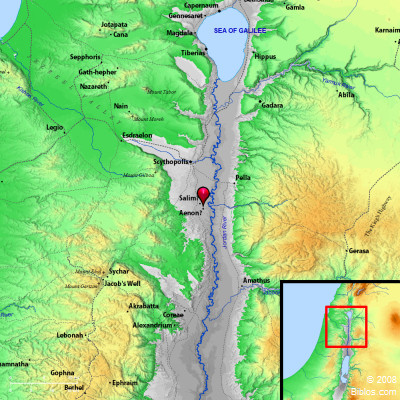
After these things Jesus and His disciples came into the land of Judea, and there He was spending time with them and baptizing. John also was baptizing in Aenon near Salim, because there was much water there; and people were coming and were being baptized— for John had not yet been thrown into prison. Therefore there arose a discussion on the part of John’s disciples with a Jew about purification. And they came to John and said to him, “Rabbi, He who was with you beyond the Jordan, to whom you have testified, behold, He is baptizing and all are coming to Him.” John answered and said, “A man can receive nothing unless it has been given him from heaven. “You yourselves are my witnesses that I said, ‘I am not the Christ,’ but, ‘I have been sent ahead of Him.’ “He who has the bride is the bridegroom; but the friend of the bridegroom, who stands and hears him, rejoices greatly because of the bridegroom’s voice. So this joy of mine has been made full. “He must increase, but I must decrease.


“He who comes from above is above all, he who is of the earth is from the earth and speaks of the earth. He who comes from heaven is above all. “What He has seen and heard, of that He testifies; and no one receives His testimony. “He who has received His testimony (he, or, He) has set his seal to this, that God is true. “For He whom God has sent speaks the words of God; for He gives the Spirit without measure. “The Father loves the Son and has given all things into His hand. “He who believes in the Son has eternal life; but he who does not obey the Son will not see life, but the wrath of God abides on him.”


Commentary

Verses 22-30

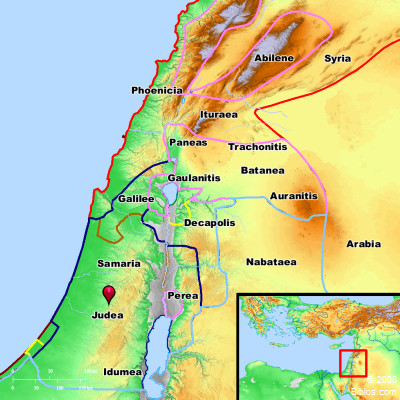
22. After these things Jesus and His disciples came into the land of Judea, and there He was spending time with them and baptizing. 23. John also was baptizing in Aenon near Salim, because there was much water there; and people were coming and were being baptized—24. for John had not yet been thrown into prison. Remember this portion of John is commonly accepted as chronological, both Jesus and John are baptizing. This is immediately after Jesus nighttime encounter with Nicodemus which inserts this chronological event that is absent in the other gospel accounts. The land of Judea is the region west of the northern portion of the Dead Sea. Samaria, which will be our location in chapter 4, is immediately to its north with Galilee beyond and immediately westward to the Sea of Galilee. Jesus is having a time that would be considered as a righteous blend of relaxation (spending time with them) and ministry (baptizing). Why do you think the author of this gospel, John, felt that he had to make the comment in verse 24? I believe that he wanted to make sure that the life and self awareness proclamation was known. John wanted to make sure that the Baptizer's perspective of Jesus was known. The Baptizer's life was as important as his death. 25. Therefore there arose a discussion on the part of John’s disciples with a Jew about purification. There was a discussion with a Jew about purification? The discussion might have surface in light of water baptism and its role in spiritual cleansing. Also the discussion is the issue as John the Baptist's ministry relates to the ministry of Jesus. If Jews are discussing 'purification,' it is imperative that we understand more concerning 'purification.' This is not the first occurrence of this word in John's gospel. It was previously used in its accusative form in 2:6 referring to the purifying of the water pots at the wedding in Cana (See also Hebrews 3:1). The Greek word καθαρισμο means cleansing or purification. It is in the Singular Masculine Genitive of Comparison (denoting the person or thing being compared when used with comparative adjectives, adverbs or verbs expressing the idea of comparison) or Genitive of Source (expressing the idea of source). If our Genitive is one of Comparison, then the discussion relates to the Baptism of John compared to the baptism of Jesus, etc. If it is taken as a genitive of source then the discussion regards the source of purification: i.e. God, Jesus, John the Baptist, the water, the Spirit, etc. The genitive word here comes from the root word katharizo meaning a washing off, i.e. (ceremonially) ablution, (morally) expiation -- cleansing, + purge, purification(-fying). The purification did not concern economic or political except where a ceremonially or morally clean lifestyle would affect one state of affairs. Be sure to recall that this issue arose out of a conversation with a Jew. There are four occurrences of this verb in the Singular Masculine Genitive construction besides John 3:25. Each translates this verb as 'purification' or 'cleansing.'

Mark 1:44 κα λέγει ατ· ρα μηδεν μηδν επς, λλ παγε σεαυτν δεξον τ ερε κα προσένεγκε περ το καθαρισμο σου προσέταξεν Μωϋσς, ες μαρτύριον ατος.
and said to him, "See you say nothing to anybody, but go show yourself to the priest, and offer for your cleansing the things which Moses commanded, for a testimony to them."

Luke 2:22 Κα τε πλήσθησαν α μέραι το καθαρισμο ατν κατ τν νόμον Μωϋσέως, νήγαγον ατν ες εροσόλυμα παραστσαι τ κυρί,
When the days of their purification according to the law of Moses were fulfilled, they brought him up to Jerusalem, to present him to the Lord.

Luke 5:14 κα ατς παρήγγειλεν ατ μηδεν επεν, λλ πελθν δεξον σεαυτν τ ερε κα προσένεγκε περ το καθαρισμο σου καθς προσέταξεν Μωϋσς ες μαρτύριον ατος.
He commanded him to tell no one, "But go your way, and show yourself to the priest, and offer for your cleansing according to what Moses commanded, for a testimony to them."

2 Peter 1:9 γρ μ πάρεστιν τατα τυφλός στιν μυωπάζων, λήθην λαβν το καθαρισμο τν πάλαι ατο μαρτιν.
For he who lacks these things is blind, seeing only what is near, having forgotten the cleansing from his old sins.

The “argument (in John 3:25) centered on the relative merits of the baptism of John and Jesus.” A Grammatical Analysis of the Greek New Testament, Zerwick, Rome, 1993, p. 293.

The Septuagint, which is the Greek translation of the Hebrew Old Testament, translates Exodus 26: 35-37using καθαρισμοῦ regarding the purifying for the altar.

Exodus 29:35-37 35 Thus you shall do to Aaron and to his sons, according to all that I have commanded you; you shall ordain them through seven days. 36“Each day you shall offer a bull as a sin offering for atonement, and you shall purify the altar when you make atonement for it, and you shall anoint it to consecrate it. 37 "For seven days you shall make atonement for the altar and consecrate it; then the altar shall be most holy, and whatever touches the altar shall be holy.”

26. And they came to John and said to him, “Rabbi, He who was with you beyond the Jordan, to whom you have testified, behold, He is baptizing and all are coming to Him.” From verse 26 tot he end of the chapter John the Baptist is educating his disciples regarding the struggle they had as they conversed with a Jew concerning purification or cleansing. If purification is believed to directly impact the political and moral aspects of life, then you will follow the thought patterns of such falsities. I believe that John's and later Jesus' disciples would confuse the kingdoms of this world (political and economic) and the kingdom of God (ceremonial, spiritual and moral). Therefore, this is a classic expression of John's disciples for Jesus crowding in on their business as they did not fully understand purification. John answers his disciple's confusion with thoughts on greatness. John will address that for his disciples, but Jesus' disciples, will struggle with that issue until the night of His betrayal.

27. John answered and said, “A man can receive nothing unless it has been given him from heaven. 28. “You yourselves are my witnesses that I said, ‘I am not the Christ,’ but, ‘I have been sent ahead of Him.’ Here is John's answer to his disciples. Only gifts from heaven matter. All leadership charisma, all influence, all authority, all prestige, all genuine honor comes as a gift, not as a reward based on merit, from heaven. Then, John, with words that will ring through eternity, proclaims 'I am not the Christ.' I will say it again, this man knew who he was and he knew who he wasn't! He was a forerunner, a servant of HIM.

29. “He who has the bride is the bridegroom; but the friend of the bridegroom, who stands and hears him, rejoices greatly because of the bridegroom’s voice. So this joy of mine has been made full. 30. “He must increase, but I must decrease. I am continuously amazed that the Bible couches many of its teachings in family terms. Here in verse 29 and 30 John uses the wedding ceremony to communicate his subservient role to Jesus. Think with me for a moment. Do you ladies remember the name of your husband's best man in your wedding? This should be the easiest to answer. Next, do you remember the names of the best men in the wedding of your siblings? Do you remember the name of best men in the weddings of your children? I hope, by now, that you are seeing how the 'friend of the bridegroom' decreases while the bridegroom increases. "Increase" αὐξάνειν Present Active Infinitive from αὐξάνω meaning: grow up, increase in power, strengthen ; exalt by one's deeds, glorify, extol, honor; of an orator, amplify, exaggerate; also, to sacrifice (Little-Scott-Jones Lexicon). "Decrease" ἐλαττοῦσθαι from ἐλαττόω meaning: make less or smaller, diminish, reduce in amount, in early writers, lower, degrade; cut down, shorten, detract from, reduce the power of (Little-Scott-Jones).Again, John the Baptist knew who he was, his place and his role in the scope of the Big Picture, the epic, eternity, etc. And, most importantly, John the Baptist knew who Jesus was, Jesus' place, and Jesus' role in the scope of the Big Picture.


Verses31-36

31. “He who comes from above is above all, he who is of the earth is from the earth and speaks of the earth. He who comes from heaven is above all. Honestly, my best shot at understanding and commenting on Scripture pales in comparison to Scripture commenting on Scripture. The passage below from the Letter to the Colossians was written by Paul who was religious Jewish renegade ransomed by Jesus Christ. Here is portion of his communication to the Gentiles in Colossae.
Colossians 1: 15-20 "He is the image of the invisible God, the firstborn of all creation. For by Him all things were created, both in the heavens and on earth, visible and invisible, whether thrones or dominions or rulers or authorities—all things have been created through Him and for Him. He is before all things, and in Him all things hold together. He is also head of the body, the church; and He is the beginning, the firstborn from the dead, so that He Himself will come to have first place in everything. For it was the Father’s good pleasure for all the fullness to dwell in Him, and through Him to reconcile all things to Himself, having made peace through the blood of His cross; through Him, I say, whether things on earth or things in heaven.

32. “What He has seen and heard, of that He testifies; and no one receives His testimony.33. “He who has received His testimony (he, or, He) has set his seal to this, that God is true. First notice the utter rejection of Jesus and His message. Even His closets disciples did not fully comprehend His purpose and His passion. John the Baptist was probalby the first to grasp who Jesus was and who he was in the big picture of Jesus' passion. Next lets look at the setting of one's seal. The word translated in the New American Standard Bible as "seal" is the Greek word ἐσφράγισεν in the third person aorist active indicative singular form from the root sphragis meaning: to stamp (with a signet or private mark) for security or preservation (literally or figuratively); by implication, to keep secret, to attest -- (set a, set to) seal up, stop. Metaphorical meaning in John 3:33- “set a seal of approval upon, confirm, also in Romans 15:28 – “assure them of it.” The Greek word σφράγισεν is also used in John 6:27 (Don't work for the food which perishes, but for the food which remains to eternal life, which the Son of Man will give to you. For God the Father has sealed him.), Revelation 20:3 (ἐσφράγισεν 'and cast him into the abyss, and shut it, and sealed it over him, that he should deceive the nations no more, until the thousand years were finished. After this, he must be freed for a short time').

If one receives or believes or trust in His message then they confirm or approve of it. But to what are those that receive laying claim? To this: ὁ θεὸς ἀληθής ἐστιν. If ever learn any Greek, you should know this expression: "God is true." 34. “For He whom God has sent speaks the words of God; for He gives the Spirit without measure. This is a verse anticipating the often mentioned subject of the Gospel of John, the coming or giving of the Holy Spirit. Noted the unreserved measure of the One whose chief end is to point us to Jesus. The Book of Acts is the historical account of the early Church written through the eyes of Luke the physician.

Acts 1:4-5 On one occasion, while he was eating with them, he gave them this command: “Do not leave Jerusalem, but wait for the gift my Father promised, which you have heard me speak about. For John baptized with water, but in a few days you will be baptized with the Holy Spirit.”

Acts 11:16 Then I remembered what the Lord had said: ‘John baptized with water, but you will be baptized with the Holy Spirit.’

35. “The Father loves the Son and has given all things into His hand. This is respite of the previous thought in verse 31. However, John the Baptist feels the need to repeat this, as does Paul in Colossians. ALL THINGS ARE GIVEN INTO JESUS' HAND. 36. “He who believes in the Son has eternal life; but he who does not obey the Son will not see life, but the wrath of God abides on him.” This phrase from the mouth of John the Baptist echoes the most well know yet least believed phrase of John 3:16. However, John includes the use of the Greek words δὲ and ἀλλ’. δὲ in the first part is commonly translated 'but, and .' The semicolon does us no favors in demarcating that this is a separate contrasting thought. The best translation for δὲ is 'and' signifying a continuing thought. The Greek ἀλλ’ introducing the wrath of God is a strong contrast to the preceding life issues with the Son. This is one of the most significant words in any language and is true in Greek. It is a word of contrast and draws a strong line of distinction between what precedes and follows it. The contrast serves to heighten the thought that the Son is God (John 1), He is to be obeyed (John 2), He must be believed in for He is Life and Blessing which is the absence of the wrath of God. He has the authority of God. Reject Jesus and reject God and thereby have wrath abiding on you. 'Abiding' (μένει from μένω meaning to stay, abide, remain) is the same word used by John later in his gospel to describe a disciples relationship with Jesus.


SUMMARY

Following Jesus will cost you something, but, NOT following Jesus will cost you more. Following Jesus yields Life Eternal. Not following Jesus will bring on the wrath of God. Note that God does not force life or wrath on you. To some degree the choice is yours, choose you this day. You choose whether to have life or wrath based on whether you choose to follow Jesus or not. Life is all about HIM.

The issue of cleansing and purification are essential in this section of the Gospel of John. Those issues are also essential to you. On what basis do you consider yourself clean? Who do you exalt when conversing about cleansing, assuming you have talked about cleansing? Do you exalt a friend, family member, preacher, boss, a prayer, a religion, a church, a president, a nation, political party, a car, a dress, a necklace, a charm pendant, or even yourself? To the degree we exalt any of those things as the basis of our purification, we are just like John's disciples and need to corrected. It is all about HIM, the Christ, Jesus.

John the Baptist is a godly example of the balance of our ministry efforts and the total subservience to the ministry of Jesus. It is all about Him. In that, we are to know our place, our purpose and our passion. Our place is to be a servant to the Bridegroom, that is Jesus. We are to usher Him in or to support Him in His pursuit of His Bride, the Church. Then we are to work, not for our kingdom, but for the Kingdom of God. Nothing we pursue should rise above Him and His Kingdom. This passion for Him is superior to every earthly passion, even the desire to increase in significance. It is all about HIM.


Let us know if we can be of any further assistance: FLSMinistries@bellsouth.net


Monday, December 21, 2009

John 1:19-34: Who are you? and Who do you know?

John 1:19-34
19 This is the testimony of John, when the Jews sent to him priests and Levites from Jerusalem to ask him, "Who are you?" 20 And he confessed and did not deny, but confessed, "I am not the Christ." 21 They asked him, "What then? Are you Elijah?" And he said, "I am not." "Are you the Prophet?" And he answered, "No." 22 Then they said to him, "Who are you, so that we may give an answer to those who sent us? What do you say about yourself?" 23 He said, "I am A VOICE OF ONE CRYING IN THE WILDERNESS, `MAKE STRAIGHT THE WAY OF THE LORD,' as Isaiah the prophet said." 24 Now they had been sent from the Pharisees. 25 They asked him, and said to him, "Why then are you baptizing, if you are not the Christ, nor Elijah, nor the Prophet?" 26 John answered them saying, "I baptize in water, but among you stands One whom you do not know. 27 "It is He who comes after me, the thong of whose sandal I am not worthy to untie." 28 These things took place in Bethany beyond the Jordan, where John was baptizing.

29 The next day he saw Jesus coming to him and said, "Behold, the Lamb of God who takes away the sin of the world! 30 "This is He on behalf of whom I said, `After me comes a Man who has a higher rank than I, for He existed before me.' 31 "I did not recognize Him, but so that He might be manifested to Israel, I came baptizing in water." 32 John testified saying, "I have seen the Spirit descending as a dove out of heaven, and He remained upon Him. 33 "I did not recognize Him, but He who sent me to baptize in water said to me, `He upon whom you see the Spirit descending and remaining upon Him, this is the One who baptizes in the Holy Spirit.' 34 "I myself have seen, and have testified that this is the Son of God."

Commentary
This section, John 1:19-34, contains two paragraphs covering John’s answer to questions regarding two individuals: Jesus and himself. With his correct and confident identification of the two, we resultantly find it necessary for us to also know Jesus and ourselves. This account of John’s testimony will allow us to see obstacles and victories by having those two pieces of knowledge not only known, but well rehearsed.
Verses 19-28
This paragraph continues our way through the first chapter with the plain “testimony of John (the baptizer).” When are doing great things for God, being a part of His Kingdom by impacting others to follow God, you will be confused with the authorities. “Who are you?” they asked John. Inquisitors and, later, credible followers will think that you are at the head of the cause; that you possess supernatural abilities and talents. Perhaps you will let all those accolades consume you by making you think that you are special. After all, where would they be without you, your leadership and your message? “Who are you?” they asked John. I ask you, “who are you?” John, as we are, was tempted, I am sure, to lay hold of the recognition supposedly due to him. But, he was asked and he refused to be identified with some of the greatest Biblical characters in all Israel. “I am NOT….” he said. Would you properly align yourself with a servant laying aside the labeling, as wrong as it was, to brag on the one whom all identification and recognition rests? John did, and so should we.
John took the opportunity of the questioning by the priests and Levites from Jerusalem to verbalize what would later be lived out. The “priests and Levites from Jerusalem” could be equated with IRS agents from Washington, DC coming to pay you a visit. These agents, as the priests and Levites did, are representatives of another authority. The priests and the Levites where errand boys on behalf of the Pharisees. Remember, that whatever information the Pharisees would get would be second hand. John will further unfold the role of Pharisees in the life of Jesus. And, we will need to remember how their first impression of Jesus was second hand.
Bethany beyond the Jordan refers to a town on the east side of the Jordan River about 5 miles north of the Dead Sea.
Verse 29 begins a new day. John is baptizing in Bethany beyond the Jordan and he sees Jesus. What a mighty proclamation of identifying the One who removes our sin from us. What is your proclamation of Him?
The priests and Levites appear to have returned to Jerusalem to give their account to the Pharisees. They are returning with incomplete information. They know who John is not but they did not find out the identity of the one John spoke.
Verse 30 states that Jesus “existed before” John. This is John’s statement to the fact that Jesus was eternal for John, the son of Zechariah and Elizabeth (Luke 1:35-45), was Jesus’ older cousin. This is one citing that gives credence to John 1:1 and 14 “In the beginning was the Word…. And the Word became flesh and dwelt among us.”

Verse 31 lets us know that John did not always know that his cousin was born to be the One. At the time of him baptizing Jesus he then becomes awakened to the true identity of Jesus. John was willing to take on a support role in order to escort the Jesus to the nation of Israel. Who do you support in such a manner?

Verses 32 through 34 contain John’s account of the testimony of the Holy Spirit. This gospel, while being a topical account of the life of Jesus, will also do much to educate us on the person and role of the Holy Spirit. Here, as is customary throughout this gospel account, the Holy Spirit is clarifying the Son of God. Jesus, the Son of God, although previously unknown, is now identified as the One who baptizes (present active participle not future tense) with the Holy Spirit (πνεύματι ἁγίῳ ‘Holy Spirit’ not “Holy Ghost’). The baptizing (of the Holy Spirit), to some extent, happened during the life of Jesus which predates the Pentecost event in Acts 2.

Who are you like? Who more closely resembles you?
John: He knows himself and his role in the bigger picture. He is confident in that role so that he fields questions that might steer him off course. He dismisses opportunities to be mistakenly identified as someone of higher stature. He is humbly bold in proclaiming Jesus and His purpose to his circle of influence.
Priests and Levites: This group is serving as messengers by doing the bidding of another group. They might take the information they gather to heart, but they are largely asking questions for someone else. They appear inquisitive but we may wonder if they are acting on their own accord and possess original thought.
Pharisees: They do not dare to be seen with this ruffian. They send someone else to do their dirty work. They inquire by proxy. They are content to live their lives and make decisions based on third hand information.

Which of the above characters characterizes you? Be it said that there is nothing wrong with questions as long as the questions lead to a life characterized by John: knowing oneself and knowing Christ. Questions can be destructive if they are the shroud behind which we hide ourselves refusing to yield to the Eternal Word who is the Son of God.