53. [Everyone went to his home. This is an interesting comment by John. The meeting place of the officers and Pharisees disbanded and the town emptied out from the festival. The festival was over. Everyone was leaving Jerusalem like the NASCAR fans leave Atlanta Motor Speedway after a race. Nothing but trash, temporary custodians and vagrants remain. This accentuates the setting of the story to follow. Our text beginning here and ex
 tending to 8:11 is noted by brackets in most English translations regarding its authentication when examining some ancient texts. 1. But Jesus went to the Mount of Olives. 2. Early in the morning He came again into the temple, and all the people were coming to Him; and He sat down and began to teach them. Everyone goes home while Jesus retreats to His favorite place to be with His Father. The Mount of Olives is east of Jerusalem. While being known for its olive trees, it rises 200 feet above the level of city with the Kidron Valley separating them. It is from this mount that Jesus will weep over the city. The Garden of Gethsemane is on this mount. Jesus favorite Judean place of retreat. "Early in the morning." Do I do anything early in the morning, especially on the morning after a festival? Jesus arose and made the trek down the mount, across the Kidron Valley and up into the city while it was still early. Now that will wake you up and get your blood pumping. "He again into the temple." Jesus was never known for running away from the opportunity to impact the people. He went where they gathered. He "sat down and began to teach them." It is almost like He was expected to be there for there were some there to be taught. They were gathered 'early in the morning' to be taught in the temple. Class has started. The teacher and the students are assembled. Class has begun. Students are attentive to the teacher. Jesus taught (Imperfect, Active, Indicative) them. The Greek word, ἐδίδασκεν, almost always refers to the Scriptures. Jesus is not teaching them how to make coffee, bagels or how to fish, read or pitch a tent. He is teaching them Scripture in the temple. Quiet yourself for He is about the business of revealing Himself in the Ancient Torah. SUDDENLY .....3. The scribes and the Pharisees brought a woman caught in adultery, and having set her in the center of the court, Talk about interrupting a class. It was like the fire alarm went off and your attention is arrested by the commotion. A group of men who managed to get up early and be at the temple where being taught by Jesus who rose early to make the trip from the Mount of Olives to the temple. The teacher and the students were on purpose to teach and hear the Scriptures. THEN, enter the scribes AND Pharisees dragging a woman caught having sex with someone not her husband. This group, scribes, Pharisees and the woman, undoubtedly stayed up late as contrasted with They took hold of her exactly, with decisive initiative, with eager self-interest." They made their way to the center, probably close to Jesus, and brought her to a standstill up front and center. She was put on display. The Greek word, μοιχείᾳ, translated 'adultery' is the form of μοιχεύω meaning 'commit adultery (of a man with a married woman, but also of a married man). LSJ states that other contemporary extra Greek literature maintains man and woman sexual connotations but spreads that breach of marital vows to a wider meanings as 'falsify,' 'to be unfaithful to God' and 'to have dalliance with the sea.' Dictionary.com gives the meaning of adultery as: "voluntary sexual intercourse between a married person and someone other than his or her lawful spouse." Enough said for now. 4. they said to Him, "Teacher, this woman has been caught in adultery, in the very act. One can easily deduce that the scribes and Pharisees either orchestrated her apprehension or they performed the apprehension of her themselves. She was literally pulled away from the person she was 'in the very act' of having sex. How were they so sure of the guilt that they could confidently storm the adultery chambers and pull her away? I think there is room here to conject that they planned the whole adulteress event in order to test Jesus. 5. "Now in the Law Moses commanded us to stone such women; what then do You say?" The
 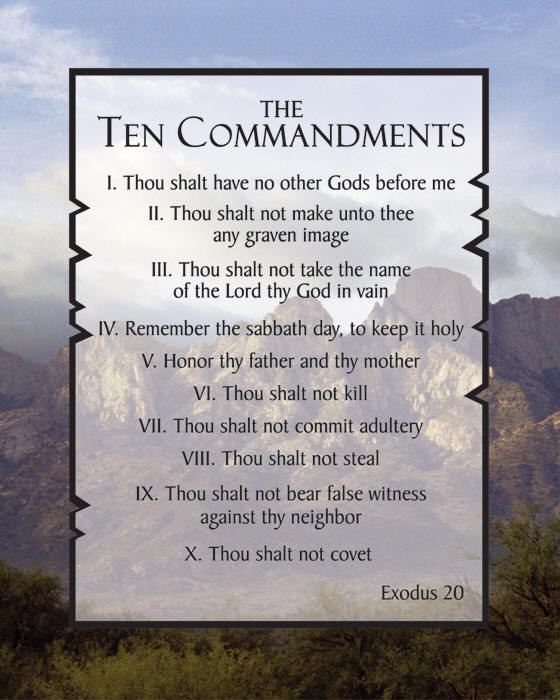 scribes and the Pharisees brought this woman before Jesus on the grounds of her violating a Law of Moses. The Law they are referring to is found in Exodus 20:14 in the giving of the Ten Commandments. The seventh commandment is "You shall not commit adultery." The Law is also implied in Leviticus 20:10 "If a man commits adultery with another man's wife- the wife of his neighbor- both the adulterer and the adulteress must be put to death" and Deuteronomy 22:22 "If a man is found sleeping with another man's wife, both the man who slept with her and the woman must die. You must purge the evil from Israel." 6. They were saying this, testing Him, so that they might have grounds for accusing Him. But Jesus stooped down and with His finger wrote on the ground. I have a question for you. Read again the Old Testament passages above (Exodus 20:10 and Deuteronomy 22:22). Where is the man? It takes two to commit adultery. Both are to be put to death. The OT passages mention the man first thereby placing emphasis on the man's involvement. Why did the scribes and Pharisees NOT bring him to the center of the temple and place him before Jesus? 7. But when they persisted in asking Him, They persisted and had time to persist because Jesus was probably giving time to reflect on the Scriptural knowledge and then repent. The Geneva Bible has a thought provoking comment on th
 is passage, "hypocrites ... are very severe judges against other men and flatter themselves while sinning." Therefore, having enough of their persisting, He straightened up, and said to them, "He who is without sin among you, let him be the first to throw a stone at her." 8. Again He stooped down and wrote on the ground. 9. When they heard it, they began to go out one by one, beginning with the older ones, and He was left alone, and the woman, where she was, in the center of the court. This passage is the passage of many sermons, but this woman, is experiencing the reality of Jesus addressing her accusers? He is her Advocate. He is her protector. He is her Defender. He is her Judge. He is her Redeemer. He is her Savior. When everyone else leaves due to their hypocrisy, she is left with the One who is anything but hypocritical. Are you ready? Here we go. This is the climax of our story. 10. Straightening up, Jesus said to her, "Woman, where are they? Did not one condemn you?" 11. She said, "No one, Lord." And Jesus said, "I do not condemn you, either. Go. From now on sin no more."] Several issues here. Jesus, in standing up is taking the same position He took when He addressed the scribes and Pharisees. Don't you love Jesus' questions? Her response declaring His LORDSHIP sets up His and His alone authority to condemn. The Greek word translated 'condemn' is κατακρίνω with the meaning of a judicial decision following a precise judicial process in which all evidence is fairly presented. The meaning in English according to Dictionary.com has several meanings but the one that fits here is that condemnation is "to declare incurable." He alone has the authority to condemn or not condemn. "Go and sin no more." Jesus does not dismiss her sin. He does not condemn and then tells her to stop sinning.
SUMMARY
Look at the chapter or section titles in your Bibles. I am suggesting that most, if not all, Bibles have something like 'The Adulteress Woman' or 'Woman Caught in Adultery' or "The Woman Taken in Adultery' or nothing at all for this section. Do not be misled by the chapter and section titles. They can lead you astray. For the primary issue of this story, hypocrisy, is centered around the absence of the male in the accusation of the woman. They were both caught, hence my title of this blog.
In Jeremiah 15 we have the LORD giving Jeremiah some personal instruction in order for him to survive and be a prophet in the perilous time of the fall of Jerusalem. In this passage, which extends from verse 19 through verse 21, Jeremiah is told to 'extract the precious from the worthless' (NASB). That is what Jesus was doing with the woman brought before Him.
GO AND SIN NO MORE!
"There is therefore now no condemnation for those who are in Christ Jesus. For the law of the Spirit of life in Christ Jesus has set you free from the law of sin and of death. For what the Law could not do, weak as it was through the flesh, God did: sending His own Son in the likeness of sinful flesh and as an offering for sin, He condemned sin in the flesh, in order that the requirement of the Law might be fulfilled in us, who do not walk according to the flesh, but according to the Spirit. ..." Romans 8:1-17 NASB
Need help finding The Advocate when you are caught in sin?
Contact Us:
Family Life Style Ministries, Inc.
Email: FLSMinistries@bellsouth.net
Twitter: flsministries
Facebook: Family Life Style Ministries, Inc.